2026 Best RMU Electrical Panel for Global Buyers?

Time:2026-09-27 Author:Amelia
0%

Choosing the 2026 best Rmu Electrical Panel requires more than comparing prices, dimensions, or brand visibility. Global buyers need equipment that matches voltage, fault level, climate, maintenance skills, and grid practices. A 12 kV panel may suit an urban feeder, while a 24 kV unit may better serve a remote industrial site. Small details matter. Cable terminations, interlocking, earthing switches, and pressure indicators can influence daily safety.

Power-system protection specialist John D. McDonald offers a useful principle: “Protection begins with understanding the system, not selecting the box.” This idea fits RMU purchasing decisions. Buyers should examine IEC 62271 compliance, internal arc classification, insulation technology, service continuity, and tested short-circuit performance. Solid-insulated designs may reduce gas concerns, while gas-insulated models can provide compact footprints. Neither option is universally best.

Field experience also deserves attention. A panel installed beside a coastal substation faces salt, condensation, and corrosion. A desert installation may require stronger sealing and thermal planning. Remote monitoring can improve visibility, but it cannot replace disciplined inspection. That is where some product comparisons become too confident. Factory claims do not always predict local performance.

This guide evaluates leading 2026 options through a practical buyer’s lens. It considers technical evidence, supplier capability, spare-parts access, commissioning support, and lifecycle value. Readers should verify every specification against current standards and project requirements. The most impressive brochure may still hide a maintenance weakness. A dependable Rmu Electrical Panel is not simply compact equipment. It is a coordinated part of a safer, more resilient distribution system.
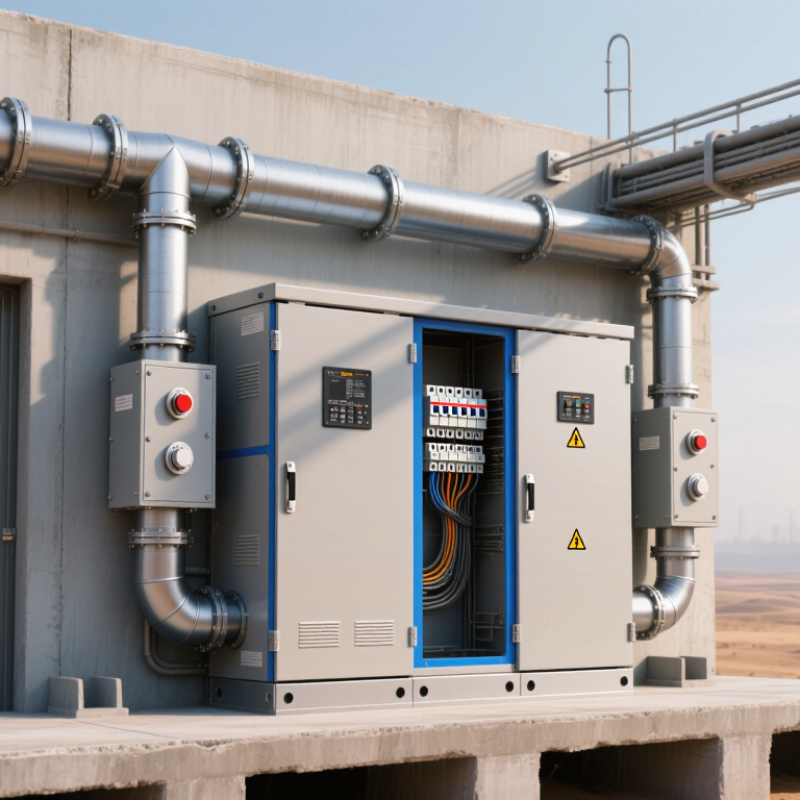
2026 Best RMU Electrical Panel for Global Buyers?

RMU Electrical Panels: Definition, Purpose, and Main Components

2026 Best RMU Electrical Panel for Global Buyers?

RMU electrical panels are compact medium-voltage switchgear assemblies used in distribution networks. RMU means Ring Main Unit. It connects, protects, and isolates sections of a power system. The ring arrangement keeps electricity available when one cable section needs maintenance. That sounds simple, but installation conditions often change the real result.

A typical RMU includes an insulated metal enclosure, busbars, load-break switches, circuit breakers, and an earthing switch. Cable compartments provide connection points for incoming and outgoing feeders. Current transformers, voltage transformers, protection relays, and fuses support measurement and fault protection. Mechanical and electrical interlocks help prevent unsafe switching sequences. Pressure relief features may also protect operators during an internal fault.

Buyers should match the panel with system voltage, short-circuit rating, frequency, altitude, humidity, and local grid requirements. Vacuum switching and gas-insulated designs offer different maintenance and environmental considerations. Ask for routine test records, wiring diagrams, material certificates, and clear spare-parts information. Inspect the cable access space carefully. Small compartments can make commissioning frustrating. A clean exterior does not prove reliable internal assembly. Protection settings also require review by qualified engineers, not blind acceptance of factory values. This is where specifications can mislead. A panel may meet a rating on paper yet perform poorly with unsuitable cables, weak ventilation, or neglected inspection schedules.

How to Compare RMU Panel Ratings, Configurations, and Protection Features

When comparing RMU electrical panels, start with ratings, not appearance. Check the rated voltage, continuous current, short-time withstand current, and peak withstand current. These values must match the local distribution network and fault level. A 12 kV panel may not suit every 12 kV system. Frequency and insulation requirements also deserve attention. Small differences matter.

Configuration affects operation and maintenance. A ring-main unit may use load-break switches, circuit breakers, fuses, earthing switches, or transformer feeders. Circuit breakers offer stronger fault interruption and easier coordination with upstream protection. Fuses can be compact and economical, but replacement access should be practical. Review the busbar arrangement, cable compartments, interlocks, and pressure-relief design. A clear mimic diagram reduces mistakes during switching. It sounds basic. It is not.

Tips: Request certified type-test evidence and recent routine-test records. Compare relay functions, CT accuracy, trip settings, and communication options. Confirm enclosure protection, corrosion resistance, and internal arc classification for the installation environment. Ask how spare parts, testing tools, and technical support will be handled locally. Installation space is often underestimated. Leave room for cable bending and safe testing. Standards provide a foundation, but project conditions decide suitability. A panel can pass a specification sheet and still create maintenance difficulties. Recheck assumptions with the utility, protection engineer, and experienced site technicians before ordering.

2026 Best RMU Electrical Panel for Global Buyers?

This benchmark compares representative IEC-oriented RMU rating profiles commonly specified for medium-voltage distribution networks. Most compact RMUs use 630 A load-break or circuit-breaker ways, while short-time withstand ratings commonly range from 16 kA to 25 kA. Buyers should also verify the required ring configuration, feeder quantity, earthing-switch rating, internal-arc classification, protection relay functions, and installation conditions before selecting a panel.

Reference framework: typical application values aligned with IEC 62271 medium-voltage switchgear practices. Final ratings must be confirmed against the project network study and the manufacturer’s certified test data.

Key Standards and Compliance Requirements for Global RMU Buyers

For a 2026 RMU purchase, verify the standards against the unit’s rated voltage and installation conditions. IEC 62271-200 covers metal-enclosed switchgear for voltages above 1 kV and up to 52 kV. IEC 62271-1 sets common requirements. Check short-time withstand current, internal-arc classification, service continuity, altitude, and ambient temperature. The nameplate should match the approved specification. Small mismatches matter.

IEC 62271-202 applies to prefabricated substations, while IEC 60529 defines enclosure ingress-protection ratings. An IP rating alone does not demonstrate internal-arc safety or corrosion resistance. Request type-test reports, routine-test records, and details of the tested configuration, including cable compartments and pressure-relief direction. Confirm local conformity marks, utility requirements, and import documentation. IEC alignment may not be enough.

The IEA’s 2023 report, Electricity Grids and Secure Energy Transitions, says annual grid investment needs to rise from about $300 billion to more than $600 billion by 2030 under its pathway. This signals infrastructure pressure, not a universal RMU demand forecast. Traceable test evidence can support smoother acceptance, but paperwork may overlook real site conditions. Check humidity, salt exposure, seismic requirements, and cable-termination access before approving the purchase.

Evaluating Safety, Reliability, Maintenance, and Lifecycle Costs

2026 Best RMU Electrical Panel for Global Buyers?

Evaluating Safety, Reliability, Maintenance, and Lifecycle Costs

For global buyers, an RMU electrical panel should prove safety before claiming performance. During site inspections, engineers should check metal segregation, pressure relief paths, earthing switches, and mechanical interlocks. Small details matter. A clear mimic diagram can prevent a dangerous switching error during a night-time outage. Equipment should also match applicable local regulations and relevant IEC type-test requirements. One certificate never replaces a complete technical review.

Reliability depends on more than short-circuit ratings. Buyers should examine insulation coordination, partial-discharge results, enclosure protection, and performance under humidity, dust, and temperature changes. Sealed compartments can reduce contamination, but they do not remove every risk. A perfect operating environment is unrealistic. Ask for verified test records, factory inspection evidence, and references from similar climates. That gap matters.

Maintenance planning directly affects lifecycle costs. A panel with accessible test points, clear cable compartments, and replaceable operating mechanisms can reduce outage time. However, low purchase price may hide expensive specialist visits, unavailable parts, or long shipping delays. Request a spare-parts list, maintenance intervals, training details, and a realistic service response plan. Remote monitoring may improve visibility, but poor data quality can create false confidence. Buyers should calculate energy losses, inspection labor, downtime exposure, and eventual disposal requirements over the panel’s expected service life.

2026 Best RMU Electrical Panel for Global Buyers? — Evaluating Safety, Reliability, Maintenance, and Lifecycle Costs
Evaluation Dimension Air-Insulated RMU SF₆-Insulated RMU Solid-Dielectric RMU Clean-Air / Alternative-Gas RMU
Insulation approach Uses air as the primary insulation medium; live parts are separated by designed clearances and barriers. Uses sealed SF₆ gas compartments for insulation and, depending on design, switching functions. Uses solid insulating materials around or encapsulating primary components; switching technology varies by design. Uses dry air or another specified non-SF₆ insulating medium; the exact gas mixture and design are product-specific.
Space and installation Generally needs more electrical clearance and floor space than compact sealed designs. Suitable where room is available. Sealed construction can provide a compact footprint, subject to the selected voltage, circuit arrangement, and access requirements. Often designed as a compact, sealed assembly; actual dimensions depend on the equipment layout and rating. Can be designed for compact installations, but footprint and clearances must be checked against the project drawings.
Safety considerations Safety depends on enclosure design, interlocks, earthing arrangements, operating procedures, and the specified internal-arc classification. Sealed compartments reduce routine access to live parts. Gas condition, pressure indication, interlocks, and arc classification remain design-specific checks. Encapsulation can limit access to primary insulation surfaces. Verify interlocking, earthing, switching capability, and internal-arc performance for the offered configuration. Assess enclosure integrity, gas monitoring or pressure indication where applicable, interlocks, earthing, and tested internal-arc performance.
Routine maintenance Accessible components can simplify inspection, but exposed or air-insulated areas may require attention to dust, humidity, corrosion, and clearances. Sealed-for-life designs can reduce routine gas-related intervention. Follow the manufacturer’s inspection schedule and applicable gas-handling rules. Sealed primary insulation can reduce routine access to live parts; mechanisms, cable connections, interlocks, and protection devices still require inspection. Maintenance needs depend on the sealing system and switching mechanism. Confirm inspection intervals, gas-handling procedures, and service support.
Reliability factors Evaluate environmental protection, insulation clearances, component quality, operating mechanism endurance, and site conditions. Evaluate seal integrity, gas-density or pressure supervision where fitted, mechanism endurance, and the availability of qualified service. Evaluate insulation-system design, ageing data, partial-discharge performance where specified, mechanism endurance, and repair strategy. Evaluate insulation-medium stability, enclosure sealing, switching endurance, type-test evidence, and regional service capability.
Lifecycle cost drivers Initial cost, building space, environmental controls, inspection labor, and replacement of wear parts can affect total ownership cost. Compact installation may reduce space-related costs; gas management, regulatory obligations, servicing, and end-of-life handling can add costs. Consider purchase price, maintenance schedule, repairability, replacement strategy, and the supplier’s documented service life assumptions. Compare purchase cost, any special handling or monitoring needs, maintenance, spare parts, and end-of-life arrangements over the project life.
Environmental and regulatory review Check material declarations, end-of-life recycling routes, and local requirements for electrical equipment and waste handling. SF₆ is a potent greenhouse gas. Check current local rules covering use, leakage control, servicing, reporting, and end-of-life recovery. Request material and recycling information for insulating components; disposal requirements depend on the materials and local rules. Verify the exact insulating medium, its environmental properties, and applicable local rules rather than relying on the term “alternative gas.”
Standards and procurement checks Specify the applicable IEC 62271 requirements, rated voltage, continuous current, short-time withstand current, and required tests. Check applicable IEC 62271 requirements, ratings, gas-compartment documentation, routine/type-test evidence, and local regulatory compliance. Check applicable IEC 62271 requirements, ratings, insulation and switching test evidence, and the offered configuration’s test coverage. Check applicable IEC 62271 requirements, ratings, type-test evidence for the insulating medium and switching design, and local acceptance.
Best-fit buyer priorities Projects prioritizing straightforward access and maintainability where additional installation space is acceptable. Projects prioritizing compactness and sealed construction, provided gas-related regulatory and lifecycle responsibilities are acceptable. Projects seeking sealed primary insulation and a defined maintenance plan, with close review of repair and end-of-life provisions. Projects seeking to avoid SF₆, subject to confirming technical performance, local approval, service readiness, and whole-life cost.

Selection note: These are technology-level comparisons, not guarantees for every product. RMU ratings, dimensions, maintenance intervals, internal-arc classification, and lifecycle costs vary by design and project. Confirm the exact configuration, applicable standards, site conditions, and local regulations before procurement.

Selecting the Best RMU Electrical Panel for Different Grid Applications

2026 Best RMU Electrical Panel for Global Buyers?

Selecting the Best RMU Electrical Panel for Different Grid Applications

The best RMU electrical panel depends on the grid, not a sales slogan. Urban substations often need compact switchgear with strong fault protection. Rural feeders may require easier access and simpler maintenance. Consider rated voltage, continuous current, short-circuit withstand, and switching frequency before comparing prices.

A reliable selection process begins with site conditions. Check altitude, humidity, salt exposure, dust, ambient temperature, and available installation space. Coastal projects may need reinforced corrosion protection. High-altitude sites can require insulation corrections. In underground rooms, verify ventilation and cable access carefully. Small details matter.

Protection functions should match the network design. Ring networks may need load-break switches, sectionalizing points, and visible earthing arrangements. Transformer connections require suitable fuse-switch coordination or circuit-breaker protection. Digital fault indicators can reduce inspection time, but they add configuration risks. Keep it practical. Verify compatibility with protection relays, remote control systems, and local utility requirements.

Use equipment tested under recognized standards, such as IEC 62271-200 where applicable. Request routine-test records, type-test evidence, wiring diagrams, and maintenance instructions. Insulation technology also deserves attention. Gas-insulated designs save space, while solid-insulated options may support stricter environmental goals. Neither is perfect. A compact panel can become difficult to service when cable bending space is ignored. Experienced engineers review drawings with installers before approval, because the “best” RMU often fails through poor site fit.

FAQS

Which ratings should be checked before comparing RMU panels?

Check rated voltage, continuous current, short-time withstand current, and peak withstand current. These values must match the local network and fault level. A 12 kV panel may not suit every 12 kV system. Frequency and insulation requirements also matter.

How does the internal configuration affect operation?

Review load-break switches, circuit breakers, fuses, earthing switches, and transformer feeders. Circuit breakers usually provide stronger fault interruption and easier protection coordination. Fuses may save space and cost. Replacement access can still be awkward.

What protection features deserve close attention?

Compare relay functions, current-transformer accuracy, trip settings, and communication options. Check whether protection settings match the network design. Remote control can reduce site visits. It also adds configuration risks.

Which documents should buyers request before approval?

Request certified type-test evidence and recent routine-test records. Review the tested configuration, cable compartments, and pressure-relief direction. Ask for wiring diagrams and maintenance instructions. Paperwork can look complete while site problems remain.

Are enclosure ratings enough to prove safety?

No. An IP rating mainly describes protection against dust and water entry. It does not prove internal-arc safety or corrosion resistance. Also verify internal-arc classification and enclosure materials. One number is not enough.

How should site conditions influence panel selection?

Check altitude, humidity, salt exposure, dust, temperature, and seismic conditions. Coastal sites may need stronger corrosion protection. High-altitude locations can require insulation corrections. Underground rooms need careful ventilation planning.

What installation details are commonly underestimated?

Leave space for cable bending, termination work, and safe testing. Review cable access before approving the layout. A compact panel may become difficult to service. This is where assumptions fail.

How can buyers reduce future maintenance difficulties?

Confirm spare-parts availability, testing tools, and local technical support. Review access to fuses, cables, relays, and earthing points. A clear mimic diagram can reduce switching mistakes. It sounds basic. It is not.

Which standards and local requirements should be checked?

Verify applicable requirements for metal-enclosed switchgear and prefabricated substations. Check rated voltage, altitude, ambient temperature, service continuity, and internal-arc classification. Confirm local conformity marks, utility rules, and import documents. Standards provide a foundation, not a complete decision.

Conclusion

Choosing the best Rmu Electrical Panel in 2026 requires a clear understanding of its function, construction, and application. An RMU panel integrates switching, isolation, protection, and distribution functions in a compact medium-voltage system, helping improve network safety and continuity. Global buyers should compare rated voltage, current, short-circuit withstand capability, insulation level, configuration, operating mechanism, protection functions, and compatibility with automation or monitoring systems. These factors determine whether the panel can meet the requirements of utility networks, renewable energy projects, industrial facilities, commercial buildings, and infrastructure applications.

Compliance with recognized electrical and safety standards is essential for reliable international deployment. Buyers should also evaluate enclosure quality, arc-fault protection, interlocking, environmental resistance, maintenance access, spare-part availability, service support, and expected service life. A complete lifecycle assessment should consider installation, inspection, operation, energy losses, maintenance, and eventual replacement costs rather than focusing only on the initial purchase price. The ideal solution is one that balances safety, reliability, scalability, regulatory compliance, and long-term operating value for the intended grid environment.


Amelia

Amelia

Amelia is a seasoned marketing professional with a wealth of expertise in our company’s core offerings. With an unwavering passion for driving growth and innovation, she plays a pivotal role in shaping our marketing strategies and enhancing brand visibility. A key aspect of her responsibilities......