10 Best Gas Insulated Substations for Global Buyers?

Time:2026-11-01 Author:Mason
0%

Selecting among the 10 Best Gas Insulated Substations requires more than comparing brochures or nameplate ratings. Global buyers must examine technical performance, project history, service capacity, and long-term operating value. A reliable substation should fit the grid’s voltage level, available footprint, climate, and maintenance strategy. Space matters greatly. In dense urban projects, a compact GIS bay can replace a much larger air-insulated arrangement, often reducing land preparation and visual impact.

This guide evaluates leading Gas Insulated Substations through practical purchasing criteria, including rated voltage, short-circuit withstand, insulation technology, monitoring systems, installation support, and lifecycle costs. Experience from utility and industrial projects shows that factory testing, clear documentation, and responsive field service can matter as much as initial price. Buyers should also review enclosure materials, gas-management procedures, spare-parts availability, and compatibility with existing protection and control systems. Small details matter.

No single manufacturer is ideal for every market. A strong supplier in Europe may offer limited support in remote regions. Another may provide excellent equipment but weaker commissioning resources. That difference can affect schedules, training, and reliability. Some evaluations may also change as suppliers update product ranges or local standards evolve. Readers should verify current certifications, references, warranties, and grid-code compliance before signing contracts. The ranking is therefore a practical starting point, not a final engineering decision. Careful comparison remains essential.
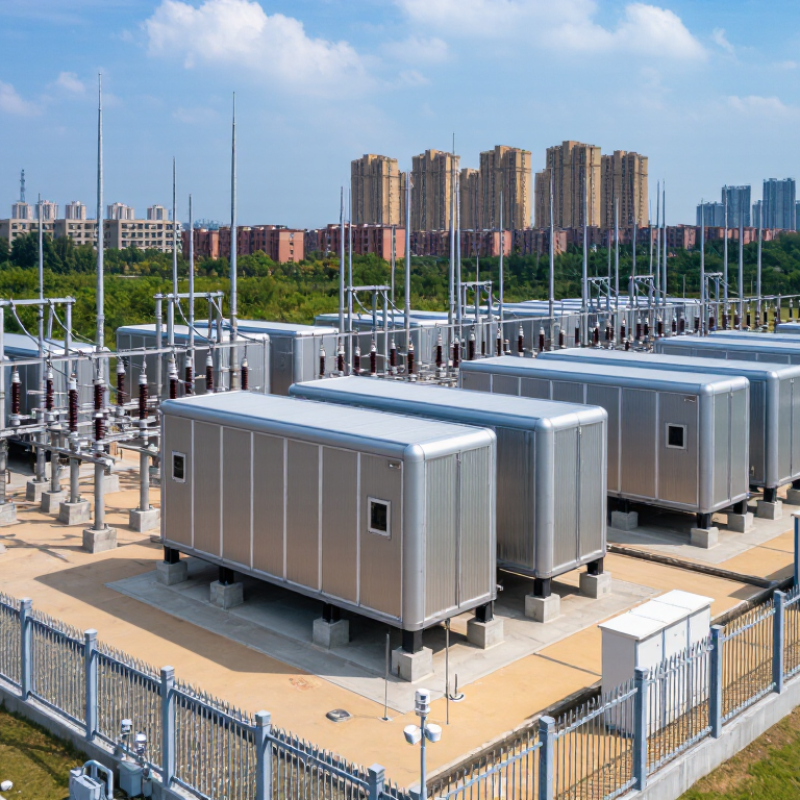
10 Best Gas Insulated Substations for Global Buyers?

Gas-Insulated Substations: Definition, Components, and Operating Principles

Gas-insulated substations, or GIS, use sealed metal enclosures filled with insulating gas. They replace large air-insulated clearances with compact, controlled electrical spaces. A GIS normally includes circuit breakers, disconnectors, earthing switches, busbars, current transformers, voltage transformers, and surge arresters. IEC 62271-203 covers high-voltage GIS requirements and testing practices.

The operating principle is straightforward but demanding. The gas insulates energized conductors inside grounded compartments. Circuit breakers interrupt fault current, while disconnectors provide visible electrical separation through verified position indicators. Earthing switches discharge trapped energy before maintenance begins. CIGRE technical guidance emphasizes gas monitoring, mechanical interlocking, and partial-discharge detection as important reliability controls. Small mistakes matter here.

The enclosure also protects equipment from dust, salt, humidity, and limited installation space. This makes GIS useful near cities, industrial facilities, offshore connections, and renewable-energy hubs. The IEA Electricity 2024 report forecasts global electricity demand growth of about 3.3% annually from 2024 to 2026, increasing pressure on compact grid infrastructure. However, the insulating medium requires careful environmental management. The IPCC Sixth Assessment Report assigns sulfur hexafluoride a 100-year global warming potential of approximately 25,200. Buyers should therefore request leak-rate records, recovery procedures, gas-quality certificates, and end-of-life plans. Compact does not mean maintenance-free. Reliability depends on installation discipline, clean assembly conditions, accurate testing, and trained technicians. Some specifications still underestimate these practical details.

Gas-Insulated Substations: Common Voltage Classes

This chart presents common IEC high-voltage equipment classes used when specifying gas-insulated substations. Higher voltage classes support bulk power transmission with compact, enclosed switchgear.

Rated voltage classes shown: 72.5, 145, 245, 420, 550, and 800 kV. These are standardized equipment voltage levels commonly referenced in high-voltage GIS specifications under IEC 62271 series.

Key Criteria for Comparing the Ten Best GIS Solutions Worldwide

Comparing the ten best gas-insulated substation solutions worldwide requires more than checking voltage ratings and footprint. The International Energy Agency’s 2023 report, Electricity Grids and Secure Energy Transitions, says annual grid investment must rise from about USD 300 billion to more than USD 600 billion by 2030 in its net-zero pathway. That pressure makes delivery time, service access, and lifecycle cost practical selection criteria. A compact GIS may save valuable space in a dense urban site, but cramped maintenance clearances can complicate routine work. Measure the actual bay layout, including cable terminations and lifting access.

Technical comparisons should record rated voltage, short-circuit withstand, insulation coordination, and performance under local temperature and humidity conditions. Check whether the supplier provides type-test evidence aligned with applicable IEC standards, plus clear procedures for gas monitoring and leak detection. Small details matter. Compare stated gas-loss rates, inspection intervals, spare-parts availability, and expected outage duration. CIGRE’s technical publications on high-voltage equipment and asset management are useful references for evaluating operational reliability, though they do not replace project-specific evidence. Ask for service records from installations with similar duty cycles. Published specifications can look reassuring; field data may be incomplete, and that uncertainty deserves explicit scoring rather than a confident guess.

Ten Leading Gas-Insulated Substation Options for Global Buyers

Global buyers comparing ten leading gas-insulated substation options should assess project conditions, not brochure rankings. A compact indoor GIS suits dense cities and coastal industrial sites. An outdoor modular GIS supports staged expansion at larger substations. Hybrid GIS combines gas-insulated breakers with air-insulated busbars, often reducing civil work. A 145 kV design fits regional networks, while 245 kV and 420 kV systems serve major transmission corridors. Mobile GIS units can restore service during planned outages or emergencies. Fit matters more.

Single-bus GIS offers simpler operation and lower installation complexity. Double-bus GIS provides greater switching flexibility for busy networks. Ring-bus arrangements support continuity around important loads. Breaker-and-a-half layouts suit transmission nodes requiring selective maintenance. Containerized GIS can simplify deployment at remote renewable projects. These ten options are not interchangeable. Engineers should review fault current, altitude, seismic risk, humidity, fire separation, and future feeder requirements before choosing equipment.

Reliable procurement requires documented type tests and factory acceptance testing. Checks should cover insulation, mechanical operation, control logic, earthing, gas tightness, and partial-discharge performance. IEC 62271-203 and local grid rules provide useful technical references. Gas selection also deserves careful review, including recovery procedures and environmental reporting. I would not pretend that the smallest footprint is always best. Tight layouts can complicate maintenance access and cable replacement. Details decide. Experienced engineers should validate the final design against lifecycle cost, operator training, and local service capability.

GIS Performance, Safety, Maintenance, and Environmental Considerations

For global buyers, the 10 best gas-insulated substations are not simply the most compact. They should deliver stable performance, safe access, and predictable maintenance. GIS is valuable where land is limited, pollution is severe, or urban reliability is critical. However, compact equipment can hide inspection challenges. Field teams need clear gas-compartment layouts, accessible monitoring points, and reliable pressure alarms. The IEA report Electricity Grids and Secure Energy Transitions estimates that 80 million kilometres of power grids must be added or refurbished by 2040. That pressure makes maintainable GIS more important than impressive specifications alone.

Safety depends on disciplined design and daily practice. Interlocking systems, grounding continuity, arc-resistant construction, and remote switching can reduce exposure during abnormal events. Environmental performance also deserves closer attention. The IPCC Sixth Assessment Report lists sulfur hexafluoride, or SF6, with a 100-year global warming potential of about 25,200. Even small leaks matter. Buyers should request factory leak-rate records, lifetime gas-management plans, and credible recovery procedures. Lower-emission insulating alternatives may help, but their service history and local technical support require careful review. Not every newer solution is automatically better.

Tips: Compare total ownership cost, not purchase price. Ask for maintenance intervals, spare-part lead times, and outage procedures. Review actual operating references in similar climates. A humid coastal site needs different protection than a dry inland station. This is often overlooked. Also, require clear training records for technicians. A technically strong GIS can still underperform when documentation is weak, sensors are ignored, or emergency drills remain theoretical.

How to Select the Best Gas-Insulated Substation for Your Project

Selecting the best gas-insulated substation starts with the project site, not a catalog. Check voltage level, fault current, altitude, ambient temperature, and available space. A compact GIS unit may suit an urban installation, while coastal sites need stronger corrosion protection. Measure transport routes too. A perfect design can fail if the enclosure cannot enter the site.

Review the technical design in detail. Confirm insulation coordination, busbar arrangement, grounding, protection interfaces, and future feeder positions. Ask for tested short-circuit ratings and documented compliance with applicable international standards. Pay close attention to gas monitoring, pressure relief, sealing quality, and maintenance access. Small omissions become expensive during commissioning.

Supplier evaluation requires evidence, not polished promises. Request reference projects with similar voltage, climate, and operating conditions. Examine factory testing procedures, inspection records, spare-parts support, and technician training. Response time matters when a gas-density alarm appears at midnight. It is also wise to compare lifecycle cost, including installation, testing, monitoring, and eventual gas recovery.

Do not select only by purchase price. That choice often looks efficient, briefly. A practical review should include schedule risk, grid integration, cybersecurity interfaces, and local service capability. I would also challenge unclear assumptions in the tender. No checklist replaces an experienced site walkdown, and even a strong specification may need revision after soil, access, or utility data changes.

10 Best Gas-Insulated Substation Options for Global Buyers — How to Select the Best GIS for Your Project
No. GIS Option Typical Network Voltage and Equipment Class Best Fit Key Selection Criteria Main Trade-Offs
1 Compact distribution GIS Approximately 66–69 kV networks; 72.5 kV equipment class is commonly used Space-constrained distribution substations, industrial sites, and urban network nodes Check continuous current, short-circuit rating, feeder count, expansion provisions, and local utility requirements. Uses less substation land than a comparable air-insulated arrangement, but requires specialist installation and maintenance skills.
2 Subtransmission GIS Approximately 110–132 kV networks; equipment classes commonly include 123 kV or 145 kV, depending on the network standard City substations, industrial supply, and replacement of existing substations in built-up areas Confirm the applicable rated voltage, busbar arrangement, protection scheme, cable or transformer interfaces, and future bay requirements. Can fit within a building or restricted site; indoor installation requires suitable ventilation, fire planning, and access provisions.
3 220–230 kV transmission GIS 220–230 kV networks; 245 kV equipment class is commonly specified Transmission substations where land availability, visual impact, or environmental exposure is a concern Evaluate busbar configuration, fault levels, switching duties, transformer connections, and grid-code requirements. Compact layout can reduce site requirements, while procurement and outage planning may be more demanding than for simpler outdoor arrangements.
4 330 kV transmission GIS Approximately 330 kV networks; 362 kV equipment class is commonly used High-voltage transmission nodes and constrained sites in networks operating at this voltage Assess insulation coordination, lightning protection, busbar scheme, short-circuit withstand, and transport limits for major components. Offers a compact substation arrangement, but requires careful project coordination and qualified high-voltage commissioning teams.
5 380–400 kV extra-high-voltage GIS 380–400 kV networks; 420 kV equipment class is commonly specified Major transmission hubs, urban grid connections, and sites where an air-insulated layout is impractical Review system fault levels, switching transients, redundancy, seismic requirements, and long-term service support. Can substantially reduce the substation footprint relative to an equivalent air-insulated layout; capital cost and maintenance specialization should be evaluated.
6 500 kV network GIS 500 kV networks; 550 kV equipment class is commonly used Extra-high-voltage transmission projects with severe space or environmental constraints Verify the required insulation level, switching duty, busbar arrangement, transport and lifting plan, and supplier service capability. High system complexity makes detailed engineering, factory testing, site testing, and lifecycle planning especially important.
7 Indoor building GIS Available across multiple voltage classes; select the equipment class to match the network and project standard Dense urban locations, underground substations, and sites requiring enclosed electrical equipment Plan building clearances, access for component replacement, cable routing, ventilation, fire protection, and safe working zones. Protects equipment from direct weather exposure and supports a compact layout, but the building and handling arrangements add design requirements.
8 Coastal or corrosive-environment GIS Voltage class selected to suit the network; enclosure and interface specifications should reflect the site environment Coastal, polluted, or industrial sites where external equipment can face corrosive or contaminating conditions Specify enclosure protection, corrosion-resistant materials and finishes, sealing, drainage, and inspection access for interfaces and accessories. The sealed enclosure reduces exposure of internal live parts to external contamination, but does not eliminate the need to manage corrosion at external surfaces and connections.
9 Renewable-energy grid-connection GIS Voltage class depends on the connection point, collector system, and transmission network Wind, solar, and other generation projects requiring a compact collector or grid-interface substation Coordinate transformer bays, cable connections, reactive-power equipment, protection, metering, and the grid operator’s connection requirements. Can help fit electrical equipment into a limited project footprint; the design must still account for generation variability and required grid-support equipment.
10 GIS using SF6-free or reduced-global-warming-potential insulation technology Availability and voltage range vary by technology and supplier; confirm that a suitable rating is commercially available for the project Buyers seeking to reduce the climate impact associated with insulating gas over the equipment lifecycle Compare insulation performance, operating limits, footprint, service procedures, gas handling, lifecycle emissions, and local acceptance. May support lower-GWP objectives, but technology maturity, available ratings, operating conditions, and service arrangements must be checked for each project.

Selection note: This is an application-based shortlist, not a universal product ranking. Voltage classes are indicative; nominal network voltage, equipment ratings, available technologies, and applicable standards vary by country and project. Confirm technical specifications, environmental requirements, and lifecycle costs with the grid operator and project engineer.

FAQS

What should buyers compare when selecting a GIS?

Compare voltage rating, short-circuit withstand, insulation coordination, and performance in local conditions. Check service access too.

Is the smallest GIS always the best choice?

No. A compact layout can save land but leave little room for cable work or lifting equipment. Fit matters.

Which GIS arrangement suits a busy transmission network?

Double-bus and breaker-and-a-half layouts can offer switching flexibility and selective maintenance. The right choice depends on network needs.

What tests and records should buyers request?

Request type-test evidence, factory acceptance results, gas-tightness checks, and partial-discharge results. Similar-site service records help, though they may be incomplete.

How do site conditions affect GIS selection?

Humidity, altitude, seismic risk, and fire separation all matter. A humid coastal station needs different protection from a dry inland site.

What environmental details should procurement teams review?

Ask for leak-rate records, gas monitoring plans, and recovery procedures. Even small leaks deserve attention.

How can buyers estimate lifecycle costs?

Include maintenance intervals, spare-part lead times, outage duration, training, and local service support. Purchase price alone is not enough.

What makes GIS maintenance safer and more practical?

Look for accessible monitoring points, clear gas-compartment layouts, pressure alarms, grounding continuity, and interlocks. Details decide.

Can newer insulating alternatives be assumed to perform better?

No. Review their service history and local technical support before choosing. I would not rely on claims alone.

Conclusion

Gas Insulated Substations (GIS) use enclosed, gas-insulated equipment to control and protect electrical power systems, offering a compact alternative to conventional air-insulated designs. This article explains GIS fundamentals, including key components and operating principles, then outlines how buyers can compare solutions based on voltage requirements, footprint, reliability, safety features, lifecycle costs, and project conditions. It also surveys ten leading types of GIS options available to global buyers, highlighting how their configurations may suit different applications without relying on brand-specific rankings.

The article further considers performance, inspection and maintenance needs, personnel safety, and environmental factors such as insulation-gas management. A practical selection framework helps project teams assess technical specifications, service support, installation constraints, and long-term operating priorities. By weighing these factors together, buyers can identify a GIS solution that fits their site, grid requirements, and budget while supporting dependable operation over its intended service life.


Mason

Mason

Mason is a seasoned marketing professional with a deep expertise in the company's offerings and a passion for driving brand awareness. With a strong background in digital marketing strategies, he has an innate ability to connect with diverse audiences and effectively communicate product benefits.......