How to Choose a Top China Electrical Substation Supplier?

Time:2026-10-17 Author:Charlotte
0%

Choosing a top China Electrical Substation supplier is no longer a simple price comparison. It is a risk decision involving safety, reliability, compliance, and long-term service.

The International Energy Agency’s Electricity Grids and Secure Energy Transitions report estimates that annual grid investment must exceed USD 600 billion by 2030. This is nearly double today’s level. More renewable power also increases pressure on transformers, switchgear, protection systems, and digital controls. As Fatih Birol, Executive Director of the IEA, stated, “The world is entering an age of electricity.” That shift makes supplier capability increasingly important.

A dependable supplier should provide verified factory testing, traceable components, and clear technical documentation. Ask for short-circuit test reports, insulation records, temperature-rise results, and protection-system settings. Request references from substations with similar voltage ratings and operating conditions. A modern factory should show disciplined quality control, not only impressive equipment. Review its ISO certifications, engineering team, commissioning experience, and after-sales response process. The World Bank and other infrastructure studies repeatedly highlight procurement transparency, lifecycle cost, and maintenance capacity as critical project factors.

However, no supplier is perfect. That matters. A polished website cannot replace an audit, witnessed testing, or a visit to an operating project. Some buyers focus too heavily on the initial quotation. That can create expensive failures later. The better question is practical: can this supplier deliver stable performance, honest communication, and technical support for twenty years? Compare total ownership cost, not merely the lowest bid. A careful decision may feel slower. It is usually safer.
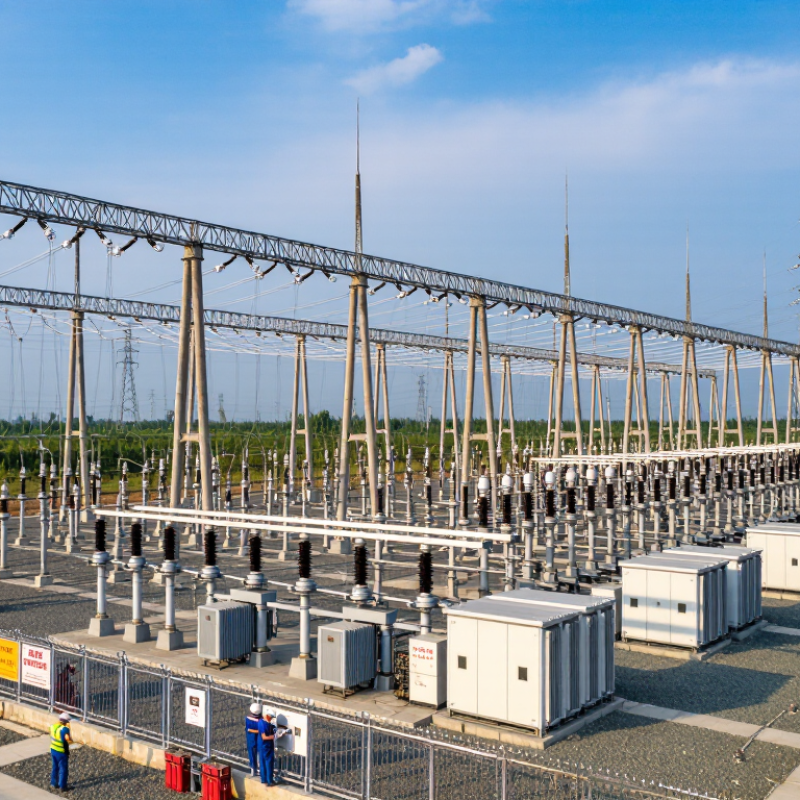
How to Choose a Top China Electrical Substation Supplier?

Understanding China’s Electrical Substation Supplier Landscape

How to Choose a Top China Electrical Substation Supplier?

China’s electrical substation supplier landscape includes manufacturers, engineering contractors, and equipment integrators. Each serves a different project stage. Manufacturers often focus on transformers, switchgear, protection systems, or complete substations. Integrators coordinate several systems and manage site delivery. When comparing suppliers, examine their experience with your voltage level, climate, grid code, and installation conditions. Request test reports, quality certificates, factory photographs, and recent project references. A reliable supplier should explain technical limits clearly, not only present attractive product images.

Tips: Visit the factory when possible. Watch how workers record winding, insulation, wiring, and final testing. Ask who handles commissioning and spare parts after shipment. Confirm communication channels and response times before signing. Small details matter. A supplier with strong engineering support can reduce redesigns and delays. However, a large production line does not automatically guarantee better service. Some suppliers depend heavily on subcontractors, which may affect consistency. Check the actual production scope.

Cost deserves careful attention, but the lowest quotation can hide missing accessories, weak documentation, or limited after-sales support. Compare complete technical offers line by line. Review delivery terms, inspection procedures, warranty coverage, and responsibility for site problems. No checklist is perfect. Even experienced buyers can overlook local environmental conditions, such as salt fog, dust, flooding, or unstable temperatures. A practical evaluation combines documents, factory evidence, technical interviews, and honest discussions about previous project difficulties. That is where supplier reliability becomes easier to judge.

How to Choose a Top China Electrical Substation Supplier?

Understanding China’s Electrical Substation Supplier Landscape

China’s electricity demand provides useful context when evaluating substation suppliers. In 2023, the secondary industry accounted for the largest share of electricity consumption, while the tertiary industry recorded strong demand from commercial, data-center, infrastructure, and public-service projects. Buyers should compare suppliers on standards compliance, voltage and capacity range, testing capability, delivery performance, lifecycle cost, and after-sales support.

Data source: China National Energy Administration, 2023 nationwide electricity consumption statistics. Values are measured in billion kWh.

Identifying Your Substation Requirements and Technical Specifications

Choosing a top China electrical substation supplier starts with defining the substation you actually need. A utility project, factory, solar site, or railway corridor will demand different designs. Record the voltage level, rated capacity, frequency, fault current, insulation level, and installation altitude. Do not rely on a general product list. Ask for single-line diagrams, load profiles, and expected expansion capacity. A 33 kV indoor substation may need compact metal-clad switchgear. A remote 220 kV yard needs wider clearances and stronger weather protection. State whether IEC, Chinese GB, or project-specific standards govern the design.

Site conditions can quietly change the specification. Check ambient temperature, humidity, salt exposure, seismic conditions, soil resistance, and available drainage. For transformers, confirm vector group, impedance, cooling method, tap range, noise limits, and losses. For switchgear, verify short-circuit withstand, ingress protection, interlocking, relay functions, and arc-fault requirements. Protection coordination must match the upstream and downstream network, not just the equipment rating. Request routine and type-test records from accredited laboratories, plus drawings showing cable entry, maintenance access, and earthing points. Evidence matters.

During supplier evaluation, compare technical compliance before comparing price. Ask who will review calculations, manage factory acceptance testing, and support site commissioning. Clarify manufacturing tolerances, spare-part availability, delivery milestones, and response times for technical changes. A reliable supplier should explain deviations in writing and identify assumptions early. I have seen projects delayed because a standard enclosure ignored local corrosion or cable-bending space. That mistake is avoidable, although specifications are rarely perfect. Leave room for review.

Evaluating Supplier Qualifications, Manufacturing Capacity, and Certifications

Choosing a top China electrical substation supplier requires more than comparing quotations. Supplier qualifications should be checked through registration records, engineering licenses, project references, and technical staff experience. Ask for completed substation projects with similar voltage levels, site conditions, and protection requirements. A supplier familiar with 110 kV or 220 kV systems should explain design choices clearly, not simply repeat catalog data.

Manufacturing capacity needs direct verification. Review the factory layout, production equipment, testing rooms, and quality-control procedures. Check whether the facility can handle transformers, switchgear, busbars, protection panels, and enclosure assembly under one controlled process. During an audit, inspect material labels and production records. Can each component be traced to a batch and inspection report? Small details matter. Delivery promises may look attractive, but overloaded production lines often create hidden delays.

Certifications provide useful evidence, but they are not complete proof. Look for a functioning ISO 9001 quality system and relevant IEC or national standard compliance. Request type-test reports, routine-test records, calibration certificates, and sample factory acceptance test procedures. Test reports should match the proposed equipment, ratings, and configuration. I have seen polished document packages with unclear revision control, which deserves careful questioning. An independent inspection can verify insulation tests, wiring checks, relay settings, and mechanical operation before shipment. No supplier is flawless. A reliable one responds openly when a drawing needs correction or a test result requires review.

Comparing Product Quality, Customization, Pricing, and Delivery Terms

How to Choose a Top China Electrical Substation Supplier?

Demand for reliable power equipment is rising. The IEA Electricity 2024 report forecasts global electricity demand growth of about 4% annually through 2026. This makes product quality a practical risk-control issue, not merely a purchasing preference. Check routine test records, type-test certificates, insulation levels, temperature-rise results, and enclosure protection ratings. Request factory acceptance testing with witnessed measurements. Small details matter. A supplier should explain failure limits clearly, even when the answer is uncomfortable.

Customization separates engineering support from simple assembly. Compare protection schemes, busbar layouts, transformer ratings, cooling systems, cable entries, and site conditions. Ask for approved drawings before production. Pricing must include testing, packaging, spare parts, commissioning support, transport, insurance, and warranty obligations. The lowest quotation can hide expensive exclusions. I have seen comparison sheets become misleading when copper adjustments and destination charges were ignored. Recheck every assumption.

Delivery terms deserve equal scrutiny. The World Bank’s 2023 Logistics Performance Index assessed 139 economies through customs, tracking, logistics competence, and timeliness. Use those same categories when evaluating a supplier’s export process. Request a manufacturing schedule, inspection milestones, shipping documents, and a realistic contingency plan. Define Incoterms, payment stages, delay remedies, and responsibilities for damaged cargo. A short lead time looks attractive. An unsupported promise is not evidence. Ask for recent, verifiable project records, but remember that past performance may not match your voltage level or climate.

Verifying After-Sales Support, Compliance, and Long-Term Reliability

Choosing a top China electrical substation supplier requires more than comparing prices. After-sales support often determines whether a fault becomes a short interruption or a costly shutdown. The International Energy Agency reports that annual global grid investment must exceed 600 billion dollars by 2030. That pressure makes dependable equipment and responsive service essential.

Ask for documented factory acceptance tests, site acceptance tests, and traceable component records. Verify compliance with IEC 62271, IEC 60076, and the certification rules of the installation country. Independent laboratory reports matter more than polished brochures. Check whether protection settings, insulation tests, temperature-rise results, and partial-discharge data are available. They should be.

Response time matters. A supplier should define remote support, on-site arrival, spare-parts availability, and warranty exclusions in writing. The U.S. Energy Information Administration reported about 137 minutes of average annual customer interruption duration in 2023, including major events. A substation problem can quickly affect production schedules, safety systems, and revenue. Ask for service records from comparable projects, not only references selected by the supplier. Long-term reliability also depends on training, firmware control, maintenance manuals, and access to replacement breakers or transformers after several years. Some evaluations still overlook these practical details. That is a mistake. Even strong suppliers may have weaknesses in local service coverage, documentation translation, or escalation speed. A site visit and a realistic emergency drill can reveal them.

FAQS

What information should I define before selecting a substation supplier?

Record voltage, capacity, frequency, fault current, insulation level, and installation altitude. Include a single-line diagram and expected future expansion. Details prevent expensive redesigns.

How do site conditions affect substation design?

Temperature, humidity, salt exposure, seismic activity, soil resistance, and drainage can change equipment requirements. A coastal site may need stronger corrosion protection. Small omissions can become large problems.

Which transformer specifications require careful review?

Check vector group, impedance, cooling method, tap range, noise limits, and energy losses. Confirm these values against the network design. Catalog ratings are not enough.

What should I verify in switchgear and protection systems?

Review short-circuit withstand, enclosure protection, interlocking, relay functions, and arc-fault requirements. Protection settings must coordinate with upstream and downstream equipment. A high rating alone proves little.

How can I evaluate a supplier’s manufacturing capability?

Inspect the factory layout, testing rooms, equipment, production records, and quality-control process. Check whether transformers, switchgear, busbars, and panels follow controlled production stages. Look for traceability.

Which documents should a supplier provide?

Request type-test reports, routine-test records, calibration certificates, drawings, and factory acceptance procedures. Reports should match the proposed ratings and configuration. Revision control matters.

How should I assess after-sales service?

Require written response times, remote support, site visits, spare-part access, and warranty exclusions. Also request maintenance manuals, training plans, and replacement support. Service gaps appear during failures.

Can a site visit reveal supplier weaknesses?

Yes. Inspect cable space, earthing points, maintenance access, material labels, and corrosion protection. A realistic emergency drill can test communication and escalation speed. No evaluation is perfect.

Conclusion

Choosing a top China Electrical Substation supplier requires more than comparing prices. Buyers should first understand the supplier landscape and define their project requirements, including voltage levels, capacity, protection systems, environmental conditions, installation needs, and applicable technical standards. Clear specifications make it easier to identify manufacturers with suitable engineering expertise and product capabilities.

A reliable evaluation should cover the supplier’s qualifications, production facilities, quality-control procedures, testing capabilities, certifications, and experience with similar projects. Buyers should also compare equipment quality, customization options, pricing transparency, lead times, payment terms, and delivery arrangements. Before making a decision, verify after-sales service, technical support, spare-parts availability, warranty coverage, regulatory compliance, and long-term operating reliability. Careful supplier assessment helps reduce project risks and supports a stable, safe, and cost-effective substation investment.


Charlotte

Charlotte

Charlotte is a seasoned marketing professional with a deep understanding of the company's portfolio and a passion for elevating its presence in the market. With a keen eye for detail and a commitment to excellence, she ensures that our professional blog is regularly updated with insightful articles......