Choosing Electric Switchyards for global projects is a decision about risk, not equipment alone. A switchyard must connect generation, transmission, and protection systems safely. It must also survive local weather, transport limits, maintenance practices, and changing grid conditions.
John Cadick, an electrical safety engineer and author, offers a useful reminder: “Safety is not a slogan; it is a way of life.” His statement applies directly to switchyard planning. Engineers should examine voltage levels, fault currents, insulation coordination, earthing design, protection speed, and future expansion. IEC 62271 requirements may guide the equipment selection, while IEEE practices can support grounding and protection studies. Local grid codes still control the final design.
Climate changes the answer.
A gas-insulated switchyard may suit a crowded urban site. An air-insulated design may offer simpler inspection and lower initial costs. Coastal salt, desert dust, heavy rain, freezing temperatures, and high-altitude insulation requirements can alter both choices. Shipping dimensions matter too. A technically excellent bay can fail if oversized transformers cannot reach the site.
Experienced project teams compare lifecycle cost, spare-parts access, outage planning, cybersecurity, and supplier support. They review factory tests, site acceptance tests, relay settings, and commissioning records. These details often separate a reliable project from an expensive correction.
There is no perfect selection.
A lower purchase price may create higher maintenance costs later. A compact solution may restrict future repairs. The most reliable decision combines engineering evidence, local experience, and honest review of uncertain assumptions. This guide explains how to make that decision with clearer priorities and fewer avoidable surprises.
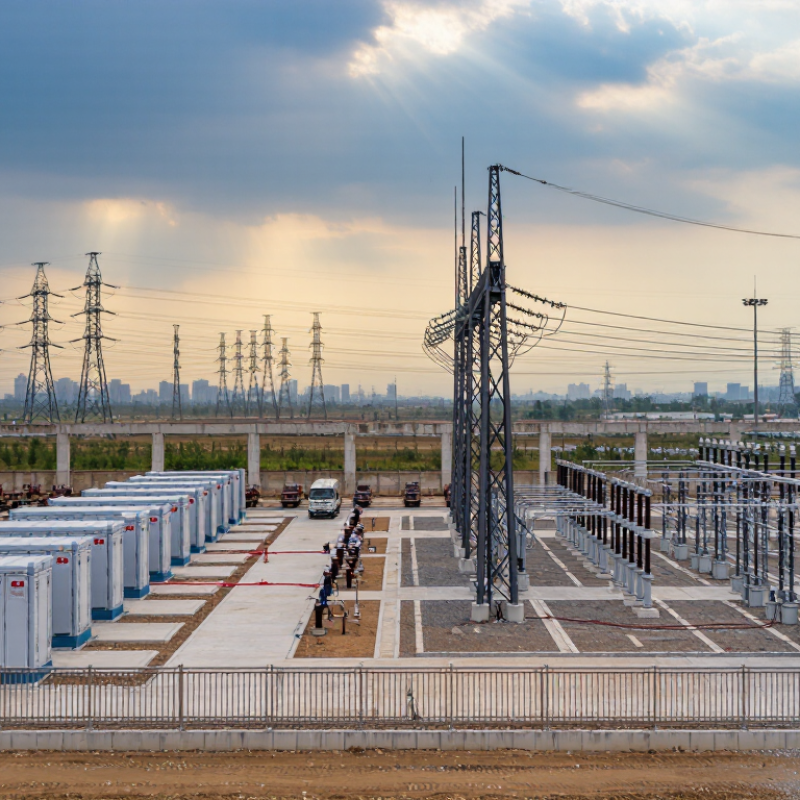
How to Choose Electric Switchyards for Global Projects?
Define Project Voltage Classes from 11 kV to 550 kV
Voltage selection starts with the network role, not the equipment catalog. An 11 kV switchyard may serve an industrial plant, while 33 kV or 66 kV often supports regional distribution. At higher demand, 110 kV, 132 kV, or 220 kV can reduce transmission losses over longer distances. The correct class depends on load growth, line length, short-circuit levels, and available generation.
The numbers are moving quickly. IRENA reported 473 GW of renewable capacity additions in 2023, reaching about 3,870 GW worldwide. More generation requires stronger collection and transmission interfaces. ENTSO-E’s Ten-Year Network Development Plan also identifies expanding cross-border transmission as essential for integrating renewable power. For major corridors, 275 kV, 330 kV, 400 kV, 500 kV, and 550 kV may be considered. However, higher voltage is not automatically better. It increases insulation coordination, clearance requirements, protection complexity, and construction cost.
Site conditions can change the decision. High altitude reduces air insulation strength. Coastal salt, desert dust, ice, and humidity affect external insulation and maintenance intervals. IEC 60071-based insulation studies should verify lightning impulse and switching impulse withstand levels. AIS can provide easier visual access, while GIS saves land in dense urban areas. Yet GIS fault repairs may require specialized procedures and longer outages. A preliminary design can still be wrong. Recheck future load, transformer impedance, fault duty, and local grid codes before freezing the voltage class.
| Project Nominal Voltage | IEC Maximum Voltage for Equipment | Typical System Frequency | Common Switchyard Application | Typical Short-Circuit Rating | Typical Lightning Impulse Withstand Level (LIWV) | Typical Power-Frequency Withstand Level | Common Insulation Medium | Typical Busbar Arrangement | Primary Selection Considerations |
|---|---|---|---|---|---|---|---|---|---|
| 11 kV | 12 kV | 50 or 60 Hz | Industrial distribution, utility feeders, auxiliary systems and renewable-energy collector networks. | 16–31.5 kA for 1–3 s | 75–95 kV peak | 28–38 kV RMS | Air-insulated switchgear or sealed gas-insulated switchgear; vacuum circuit breakers are standard for medium voltage. | Single busbar; sectionalized single busbar for higher continuity. | Load current, motor starting, arc-flash energy, feeder expansion, indoor clearance and local utility requirements. |
| 22 kV | 24 kV | 50 or 60 Hz | Urban distribution, mining, industrial plants and medium-voltage collector systems. | 20–31.5 kA for 1–3 s | 125–145 kV peak | 50–60 kV RMS | Air-insulated or compact gas-insulated switchgear with vacuum interruption. | Single busbar or sectionalized single busbar. | Available fault level, cable charging current, earthing method, environmental pollution and space limitations. |
| 33 kV | 36 kV | 50 or 60 Hz | Sub-transmission, wind and solar collector substations, industrial distribution and rural networks. | 25–40 kA for 1–3 s | 170–200 kV peak | 70–80 kV RMS | Outdoor air-insulated equipment or metal-enclosed vacuum switchgear. | Single busbar, sectionalized busbar or ring-bus arrangement. | Long cable feeders, transformer energization, lightning exposure, grounding transformer requirements and future bays. |
| 66 kV | 72.5 kV | 50 or 60 Hz | Sub-transmission networks, renewable-energy collector substations and large industrial loads. | 25–40 kA for 1–3 s | 325–350 kV peak | 140–160 kV RMS | Outdoor air-insulated switchyard or compact gas-insulated switchgear. | Single busbar, sectionalized busbar, ring bus or breaker-and-a-half for important nodes. | Required creepage distance, switching-surge exposure, transformer neutral grounding and line protection performance. |
| 110 kV | 123 kV | 50 or 60 Hz | Regional transmission, utility interconnection, grid supply points and large renewable projects. | 31.5–50 kA for 1–3 s | 550–650 kV peak | 230–275 kV RMS | Outdoor air-insulated equipment; gas-insulated switchgear is used where land or pollution constraints apply. | Single busbar with transfer bus, double busbar or ring bus. | System stability, line length, transformer impedance, lightning performance, land availability and grid-code protection. |
| 132 kV | 145 kV | 50 or 60 Hz | Regional and sub-regional transmission, utility substations and high-capacity generation connections. | 31.5–50 kA for 1–3 s | 650–750 kV peak | 275–325 kV RMS | Air-insulated switchyard, hybrid switchgear or gas-insulated switchgear. | Double busbar, ring bus or breaker-and-a-half for critical substations. | Busbar fault clearing time, line compensation, transformer switching, altitude correction and pollution severity. |
| 220 kV | 245 kV | 50 or 60 Hz | Bulk power transmission, major generation evacuation and interconnection between regional networks. | 40–63 kA for 1–3 s | 1,050–1,175 kV peak | 460–510 kV RMS | Outdoor air-insulated equipment or gas-insulated switchgear for compact urban installations. | Double busbar, ring bus, breaker-and-a-half or double-breaker double-busbar. | Transient recovery voltage, system fault level, shunt-reactor switching, right-of-way, clearances and reliable busbar protection. |
| 275 kV | 300 kV | 50 or 60 Hz | High-capacity transmission corridors and strategic grid substations. | 40–63 kA for 1–3 s | 1,175–1,300 kV peak | 460–570 kV RMS | Outdoor air-insulated equipment; gas-insulated technology for restricted sites. | Breaker-and-a-half or double busbar with bus coupler. | Switching surges, controlled switching, phase-to-ground clearances, series compensation and high-speed protection. |
| 400 kV | 420 kV | 50 or 60 Hz | Bulk transmission, interconnection of national grids and evacuation from large power stations. | 40–63 kA for 1–3 s | 1,425–1,550 kV peak | 570–610 kV RMS | Outdoor air-insulated switchyard or gas-insulated switchgear where footprint is critical. | Breaker-and-a-half, double-breaker double-busbar or ring bus for selected sites. | Transient stability, controlled switching, line reactors, shunt compensation, corona control, audible noise and very large clearances. |
| 500 kV | 550 kV | 50 or 60 Hz | Extra-high-voltage bulk transmission, long-distance power transfer and major cross-border interconnections. | 40–63 kA for 1–3 s | 1,675–1,800 kV peak | 740–800 kV RMS | Outdoor air-insulated equipment; gas-insulated switchgear is selected for space-constrained or highly polluted locations. | Breaker-and-a-half or double-breaker double-busbar with dedicated busbar protection. | Power-angle stability, switching overvoltages, shunt reactors, series compensation, insulation coordination, corona, altitude and environmental clearances. |
Start with measured site data, not a product catalogue. AIS needs open space and visible maintenance access. GIS uses sealed compartments and suits dense sites. Land savings are not guaranteed. Trenches, buildings, fire separation, and future bays still need room.
AIS can suit spacious sites with easy access and moderate environmental exposure. Its equipment is more visible during inspections. Extensions may be simpler. Weather exposure remains a concern. Maintenance planning still matters.
GIS may fit cities, coastal areas, and high-altitude locations. Its sealed sections reduce exposure to dust, salt, and moisture. A compact layout can save substantial land. Specialized maintenance skills are necessary.
Measure equipment, cable trenches, control buildings, roads, fire gaps, and future bays. Include transport turning space. Then test the layout. A small plot can hide major lifecycle constraints.
Record maximum and minimum temperatures, humidity, rainfall, wind, sunlight, and pollution. Coastal sites may face salt fog. Desert sites need protection from fine dust. Tropical sites need condensation control. Local records may be incomplete.
Thinner air reduces insulation strength and cooling efficiency. Designers may need larger clearances or stronger cooling. Verify temperature-rise limits and continuous current ratings. Do not trust catalogue values alone.
Check the seismic zone, soil type, expected acceleration, and equipment anchoring. Coordinate supports for transformers, busbars, and cabinets. Flexible connections can reduce structural stress. Nearby industrial vibration may be overlooked. I have underestimated it before.
Build a compliance matrix covering insulation, testing, clearances, grounding, protection, and fault duty. Map each requirement to drawings, calculations, certificates, and factory tests. Confirm local grid-code functions. A complete spreadsheet may still hide an untested interface.
Review transport routes, soil conditions, outage limits, maintenance skills, and spare-part access. Remote projects may face difficult deliveries. GIS reduces weather exposure but needs specialist support. AIS may be easier to inspect. Neither option is automatically safer.
Choosing Electric Switchyards for global projects requires a structured evaluation of electrical, environmental, and regulatory conditions. Begin by defining the project’s voltage class, from 11 kV to 550 kV, based on transmission requirements, load demand, and grid connection standards. The choice between air-insulated switchgear (AIS) and gas-insulated switchgear (GIS) should then be assessed using IEC 62271-200, available site footprint, installation access, maintenance needs, and long-term operating conditions.
Short-circuit performance must be calculated according to IEC 60909, with equipment ratings selected for prospective fault currents of up to 63 kA where required. Project specifications should also address climate exposure, seismic activity, pollution levels, and altitude effects, particularly for installations above 1,000 meters. Before procurement, verify that the complete switchyard design and equipment comply with applicable IEC and IEEE standards as well as local grid-code requirements. This process helps improve safety, reliability, interoperability, and lifecycle value across diverse international project environments.

 Mingri Electric