Electricity networks are becoming more distributed, automated, and difficult to operate. The International Energy Agency’s Electricity Grids and Secure Energy Transitions report (2023) estimates that over 80 million kilometres of grids must be added or refurbished by 2040. It also says annual grid investment must more than double by 2030. These figures place greater pressure on medium-voltage equipment, including the Ring Main Unit Substation.
A reliable RMU is not chosen by price alone. It must match the network voltage, fault level, load profile, protection scheme, and installation environment. IEC 62271-200 provides important requirements for metal-enclosed medium-voltage switchgear, including internal arc classification and service conditions. Those details matter beside a transformer, inside a compact kiosk, or beneath a damp coastal roof.
Small decisions become expensive later. Poor access can delay maintenance. Incorrect protection settings can interrupt healthy feeders. An unsuitable enclosure may age quickly under dust, heat, or moisture. Seven practical tips can help engineers, contractors, and asset owners compare designs with greater confidence. They cover electrical ratings, safety, switching technology, automation, environmental performance, maintenance, and supplier capability.
The Energy Institute’s Process Safety Leadership report highlights the value of competent design and disciplined maintenance. That lesson also applies here. A datasheet may look complete. It may still hide a weakness. Ring continuity, emergency operation, and future expansion deserve direct questions before procurement. No checklist replaces a site survey, but a careful checklist can prevent avoidable mistakes.
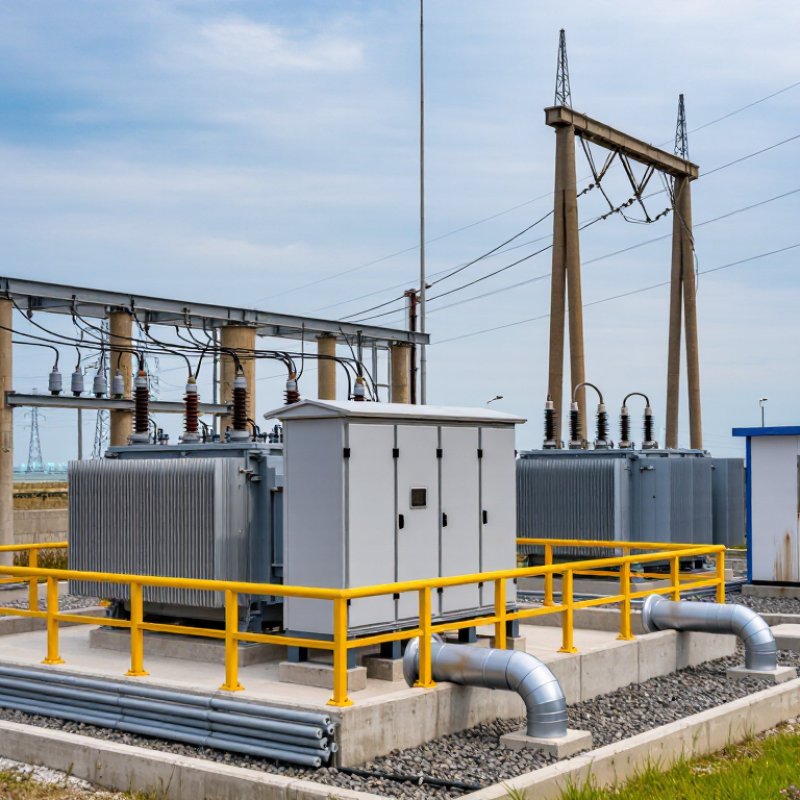
A ring main unit substation connects medium-voltage cables, transformers, and distribution feeders in a compact, controlled enclosure. Its core function is continuity. If one cable section fails, operators can isolate it and restore supply from the opposite direction. Most units use two ring switches and one transformer feeder. The ring switches manage incoming and outgoing circuits, while the feeder supplies a transformer through a circuit breaker or fuse-switch. Earthing switches discharge isolated sections before maintenance. Safety comes first.
Common configurations include open-ring, radial, and closed-ring arrangements. An open ring normally keeps one point open, reducing fault-current complexity while preserving an alternative supply path. A radial unit costs less but offers limited backup. A closed ring can improve flexibility, yet protection coordination becomes more demanding. Engineers must check cable ratings, transformer demand, short-circuit levels, and relay settings together. A neat diagram is not enough.
In the field, clear mimic indicators and mechanical interlocks prevent dangerous switching errors. Cable termination space also matters, especially where several large cables bend inside a narrow cabinet. Air-insulated, vacuum, and gas-insulated designs each affect maintenance, footprint, and environmental considerations. Choose the configuration around actual load growth, not only today’s demand. Keep it simple. A perfect layout rarely exists, and assumptions about future expansion can prove expensive. Site access, moisture, temperature, and local operating procedures deserve equal attention.
| Tip | Selection Dimension | What to Check | Typical Options or Values | Why It Matters |
|---|---|---|---|---|
| 1 | System Voltage and Insulation Level | Match the RMU rated voltage, power-frequency withstand voltage, and lightning impulse withstand voltage with the distribution network. | Common medium-voltage classes include 6 kV, 10 kV, 12 kV, 15 kV, 20 kV, and 24 kV; the exact rating depends on the local utility system. | Correct insulation coordination reduces the risk of flashover, equipment damage, and unplanned outages. |
| 2 | Continuous Current and Short-Time Withstand | Verify the busbar and switch-disconnector ratings against the expected load current and prospective short-circuit current. | Continuous current is commonly selected in the 200–630 A range; short-time withstand ratings are often specified for 1 or 3 seconds, subject to the network fault level. | Adequate ratings prevent overheating and ensure the RMU can withstand faults until the protection system clears them. |
| 3 | Choose the Appropriate RMU Configuration | Determine the number of ring ways, transformer feeder ways, bus-section devices, and metering panels required. | Typical arrangements include 2-way ring units, 3-way units with two ring switches and one transformer feeder, and 4-way units with additional feeder or metering functions. | The configuration affects network flexibility, load transfer capability, fault isolation, installation space, and future expansion. |
| 4 | Select the Switching and Protection Functions | Identify whether the feeder requires a switch-disconnector, fuse-switch combination, circuit breaker, relay protection, or earth-fault protection. | Switch-disconnectors are commonly used for ring cable sections; circuit breakers with protection relays are suitable for higher fault levels, critical feeders, and transformer protection. | Proper protection improves selectivity, limits equipment damage, and allows only the faulty section to be disconnected. |
| 5 | Evaluate Earthing and Interlocking | Check the earthing-switch rating, cable-test facilities, mechanical or electrical interlocks, and access-control provisions. | Common safety provisions include visible or mechanically indicated earth positions, trapped-key interlocking, cable access interlocks, and voltage presence indicators. | These functions help prevent incorrect switching, accidental energization, and unsafe cable work. |
| 6 | Consider Insulation Technology and Installation Environment | Assess whether the RMU will be installed indoors or outdoors and consider moisture, dust, salinity, altitude, temperature, and space limitations. | Available technologies may include air-insulated, gas-insulated, or solid-insulated compartments. Enclosure protection commonly uses an IP rating appropriate to the installation area. | Environmental suitability affects service life, maintenance requirements, dielectric performance, and personnel safety. |
| 7 | Plan Operation, Monitoring, and Future Maintenance | Review manual or motorized operation, remote indication, communication interfaces, condition monitoring, cable testing, and spare-part access. | Options may include motor operators, auxiliary contacts, remote terminal interfaces, fault passage indicators, load-current measurement, and temperature monitoring. | Well-planned monitoring and maintenance features can reduce outage duration and support distribution automation. |
It connects medium-voltage cables, transformers, and feeders inside a compact enclosure. Its main purpose is supply continuity.
Operators isolate the failed cable section using ring switches. Supply can then return from the opposite direction, when the network allows it.
Most units include two ring switches and one transformer feeder. Earthing switches discharge isolated sections before maintenance.
A radial arrangement usually costs less but provides limited backup. An open ring keeps one point open. A closed ring offers flexibility but needs careful protection coordination.
They should compare voltage, normal current, short-time withstand, and peak withstand ratings with the network study. Transformer demand and fault levels also matter.
Check earthing points, mechanical interlocks, shutters, voltage indicators, and resistance to moisture. The enclosure should prevent access to live parts.
Confirm that fuses, breakers, and relays coordinate with nearby equipment. The faulty section should trip without shutting down the entire site.
Temperature, altitude, humidity, cable bending space, and maintenance access all influence the design. A tidy drawing is not enough.
Review test records, protection settings, spare-parts access, training, warranty limits, and local technical support. A low quotation may hide costly outages.
Include visual inspections, mechanism checks, insulation testing, relay verification, and specialist-tool requirements. Estimate costs over fifteen to twenty years.
Large cables need room to bend safely inside the cabinet. Tight space can complicate maintenance and increase risk.
No. It may have limited backup, higher interruption risk, or expensive replacement parts. Future demand estimates can also be wrong. Assumptions need review.
Choosing the right Ring Main Unit Substation requires a clear understanding of how it operates within a medium-voltage distribution network. Start by reviewing its configuration, voltage level, expected load capacity, and network requirements to ensure reliable power flow and future expansion. The unit should also include suitable safety features, protection systems, isolation functions, and fault ratings that match the risks and operating conditions of the installation.
The enclosure and installation environment are equally important. Consider available space, indoor or outdoor placement, moisture, dust, temperature, corrosion, and other environmental conditions when selecting the appropriate protection class. Finally, compare suppliers based on product quality, technical support, maintenance access, spare-part availability, warranty terms, and expected service life. Evaluating both initial purchase costs and long-term operating expenses will help users choose a dependable, safe, and cost-effective solution for their network.

 Mingri Electric