China’s solar manufacturing strength has changed how developers evaluate grid infrastructure. IRENA’s Renewable Capacity Statistics 2024 recorded 473 GW of new solar capacity worldwide in 2023. Total global solar capacity reached approximately 1,419 GW. Every project needs dependable collection, transformation, protection, and control equipment.
That makes a Solar Power Substation more than a steel enclosure beside photovoltaic panels. Buyers should examine transformer losses, voltage class, short-circuit performance, harmonic control, relay settings, SCADA compatibility, and enclosure protection. Factory testing matters. So does field support after delivery. A supplier may offer an attractive price, yet weak commissioning assistance can create costly delays under intense sunlight and dust.
The International Energy Agency’s Electricity Grids and Secure Energy Transitions report warns that “the world’s electricity grids are becoming a bottleneck for the clean energy transition,” as stated by IEA Executive Director Fatih Birol. His observation directly applies to solar substation selection. A well-designed unit must connect renewable generation safely while supporting changing grid conditions. IRENA data also shows why this requirement is becoming urgent.
This guide compares China’s leading suppliers through engineering capability, manufacturing experience, testing discipline, customization, delivery performance, and lifecycle service. Certifications deserve careful checking. Marketing language is not evidence. Site conditions can expose hidden weaknesses, especially in coastal, high-altitude, or desert projects. No ranking is perfect. A supplier that suits one project may fail another. Buyers should verify references, inspect test records, and match every specification with the grid code before signing.
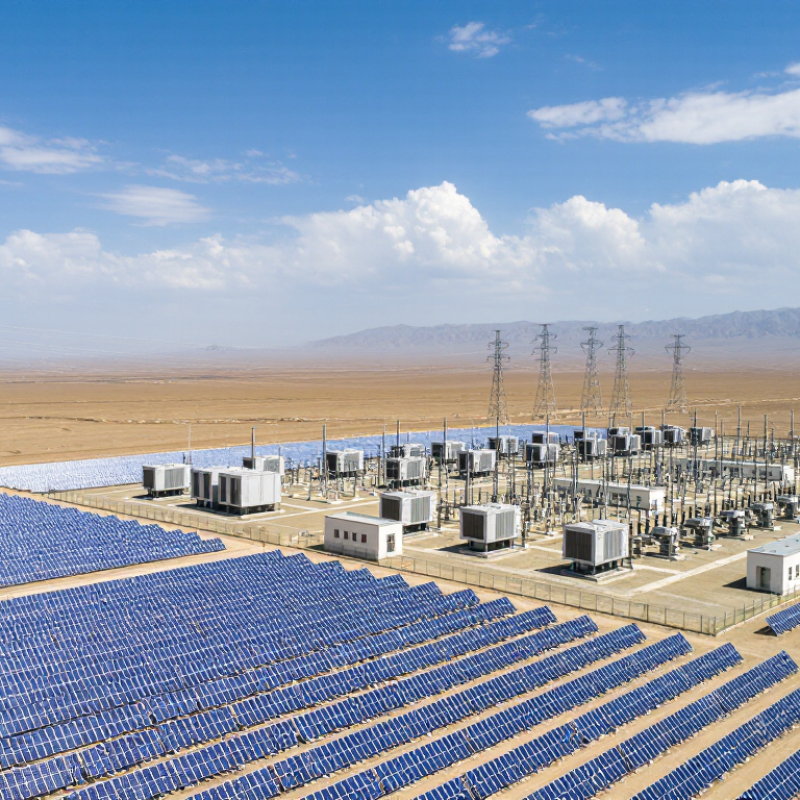
China Top Solar Power Substation Suppliers: How to Choose?
For a 110/35 kV solar project, define the substation before comparing suppliers. Start with the plant capacity, grid connection point, and required export voltage. Confirm whether 35 kV collector feeders will connect to one or more 110 kV transformers. The transformer rating should cover expected output, reactive power, ambient temperature, and future expansion. Do not size it only from the panel nameplate.
Grid requirements control many design decisions. Request the utility’s rules for voltage regulation, frequency response, fault ride-through, protection, metering, and power quality. Specify short-circuit levels at the 110 kV connection point. Include earthing resistance, insulation coordination, lightning protection, and switching surge limits. A dry climate is not automatically safe. Dust, heat, altitude, and seasonal storms can affect equipment performance. Small details matter.
A capable supplier should provide load-flow studies, protection coordination, a clear single-line diagram, and tested equipment records. Ask for factory acceptance testing, site commissioning procedures, spare-parts support, and response times. Review experience with similar 110/35 kV solar sites, not only general substation projects. Field inspections often reveal weak cable sealing or poor access planning. A neat drawing can still hide maintenance problems. One design assumption may be wrong. Keep interfaces between the solar plant, substation, and utility clearly documented.
Define Substation Requirements for 110/35 kV Solar Projects
A 110/35 kV solar substation typically raises the collector-system voltage from 35 kV to the 110 kV grid-connection level. When evaluating suppliers, confirm that the proposed equipment is designed for both nominal voltage levels, complies with the local grid code, and supports the required protection, insulation, earthing, metering, and power-quality functions. Final ratings must be verified through the utility interconnection study and site-specific short-circuit analysis.
China’s photovoltaic base reached 609.49 GW by the end of 2023, according to the National Energy Administration. The same report recorded 216.88 GW of new solar capacity that year. This scale changes how buyers should assess substation suppliers. A supplier serving a utility-scale project must prove more than a large factory and attractive pricing. Check annual transformer output, protection-panel capacity, testing resources, and completed delivery records.
The IEA PVPS Trends 2024 report also identifies China as the world’s largest solar market. That growth creates pressure on procurement schedules, grid connection studies, and spare-part availability. Ask for evidence from similar projects, including voltage levels, transformer ratings, short-circuit calculations, and commissioning dates. Factory acceptance tests should cover insulation, temperature rise, relay protection, and communication interfaces. Small details matter. A missing test record can delay energization.
Supplier capacity should match project risk, not only China’s 609 GW headline. Review audited production data, quality certifications, engineering staffing, and subcontractor controls. Site experience is especially valuable when desert dust, coastal salt, or winter temperatures affect equipment selection. However, capacity figures are not always comparable. Some suppliers report designed output, while others report actual shipments. That weakness deserves scrutiny. I would request three years of verified delivery data and contact references directly. A polished catalogue is not proof.
China Top Solar Power Substation Suppliers: How to Choose?
When evaluating solar substation suppliers in China, IEC 62271 compliance deserves close attention. This standard covers high-voltage switchgear and controlgear safety. Ask for valid type-test reports, routine-test records, and rated short-circuit data. Do not accept a certificate without checking its scope. The tested voltage, current, insulation level, and enclosure design should match your project. Small differences matter.
Transformer efficiency above 98% sounds attractive, but the test conditions must be clear. Request guaranteed losses at no-load and rated-load conditions. Check the efficiency calculation at the expected solar output, not only at full load. A transformer may exceed 98% during one operating point and perform worse during partial loading. Review temperature-rise results, cooling arrangements, and harmonic tolerance. These details affect energy yield and service life.
Experienced buyers also inspect factory procedures, calibration records, and quality traceability. Ask how technicians handle wiring errors, moisture ingress, and protection relay settings. A reliable supplier should explain corrective actions with evidence. I have seen projects focus heavily on purchase price, then discover unclear loss guarantees during commissioning. That mistake is costly. Still, documents alone are not enough. A factory audit and witnessed testing can reveal practical weaknesses. Some supplier data may look complete, yet omit loading assumptions. Recheck every figure against local grid conditions, maintenance access, and expected weather.
| Evaluation Dimension | Recommended Technical Benchmark | Relevant Standard or Method | Verification Evidence | Selection Priority |
|---|---|---|---|---|
| Medium-voltage switchgear compliance | The proposed switchgear should be designed and tested for its declared rated voltage, insulation level, short-time withstand current, peak withstand current, and short-circuit duration. | IEC 62271-1 and the applicable IEC 62271 product standard, such as IEC 62271-200 for AC metal-enclosed switchgear. | Type-test report, routine-test report, nameplate data, technical datasheet, and certificate traceable to the exact switchgear configuration. | Critical |
| Internal arc classification | Where personnel may be present, request an internal arc classification appropriate to the installation location, access sides, rated voltage, and prospective fault current. | IEC 62271-200 internal arc classification requirements. | Independent internal arc test report showing the tested enclosure arrangement, access type, arc duration, and current level. | Critical |
| Circuit-breaker performance | Confirm rated short-circuit breaking current, making current, operating sequence, mechanical endurance, and protection-coordination compatibility. | IEC 62271-100 for AC circuit breakers and the applicable project protection study. | Type-test report, routine-test records, operating-time report, and protection-relay coordination data. | Critical |
| Transformer efficiency | Target efficiency above 98% at the specified rated load, power factor, tap position, and temperature conditions. The operating point must be stated because efficiency varies with load. | IEC 60076 series and the project-defined efficiency test conditions. | Certified loss and efficiency test report listing no-load loss, load loss, impedance voltage, test temperature, rated power, and measurement uncertainty. | Critical |
| Transformer loss calculation | Use: Efficiency = Output Power ÷ (Output Power + No-Load Loss + Load Loss). Load loss should be corrected to the declared reference temperature. | IEC 60076 test procedures and the agreed purchasing specification. | Reproducible calculation sheet matching the independent test report and the transformer nameplate rating. | High |
| Transformer insulation and temperature rise | Verify rated insulation levels, dielectric-test results, cooling method, temperature-rise limits, and suitability for the site altitude and ambient temperature. | IEC 60076-1 and the applicable liquid-immersed or dry-type transformer requirements. | Routine dielectric-test records, temperature-rise test report, cooling-class declaration, and environmental design data. | Critical |
| Photovoltaic and grid-interface compatibility | Check reverse power flow, voltage fluctuation, harmonic loading, energization inrush, reactive-power requirements, and inverter protection coordination. | Project grid-code requirements, utility interconnection rules, and applicable IEC protection and power-quality requirements. | Load-flow study, short-circuit study, harmonic assessment, inverter compatibility statement, and protection-setting schedule. | High |
| Enclosure and environmental protection | Specify enclosure protection according to indoor or outdoor exposure, dust, moisture, corrosion, access control, and cable-entry requirements. | IEC 60529 for IP classifications, together with the applicable IEC 62271 enclosure requirements. | IP test report, corrosion-protection specification, material declaration, installation drawing, and environmental suitability statement. | High |
| Factory quality control | Every completed assembly should undergo documented routine tests before shipment, with serial-number traceability for major components and test instruments. | Applicable IEC 62271 and IEC 60076 routine-test requirements. | Signed routine-test records, calibration certificates, inspection and test plan, nonconformance procedure, and final-release checklist. | High |
| Documentation and after-sales support | Require complete drawings, operation and maintenance manuals, spare-parts lists, commissioning procedures, warranty terms, and response-time commitments. | Contract-specific technical documentation schedule and commissioning requirements. | Document register, approved drawings, maintenance schedule, training plan, warranty certificate, and service-level agreement. | Medium |
Choosing a solar power substation supplier requires more than comparing the lowest EPC quotation. The International Renewable Energy Agency reported that utility-scale solar PV costs fell by 12% in 2023. That pressure can encourage aggressive pricing. However, a cheaper offer may exclude protection testing, spare breakers, civil works, or communication equipment. Ask for a cost schedule with transformer capacity, switchgear ratings, cable lengths, commissioning labor, and contingency allowances shown separately.
A 25-year design life should be tested, not simply printed in a proposal. Review transformer thermal margins, corrosion protection, insulation levels, relay replacement plans, and maintenance access. NREL’s 2024 Annual Technology Baseline uses long operating periods for utility-scale solar analysis, but long-term performance still depends on equipment quality and site conditions. A coastal substation needs different protection from a dry inland site. Small details matter. Request factory test records and failure-rate assumptions.
Grid-connection support can determine the project schedule. The IEA’s Electricity Grids and Secure Energy Transitions report estimates that global grid investment must more than double by 2030 to meet clean-energy targets. This highlights the value of suppliers experienced with utility studies, reactive-power control, fault-ride-through settings, and protection coordination. Confirm who handles the interconnection application, utility comments, relay settings, and energization tests. Define response times in the contract. One weak point remains: grid requirements can change after design approval, so retain engineering flexibility and a documented change-control process.
China Top Solar Power Substation Suppliers: How to Choose?
Selecting a solar substation supplier requires more than comparing quotations. Audit the quality system, production controls, and inspection records. Request the certificate scope, issue date, and recent audit findings. A certificate alone proves little. Ask how corrective actions were closed. Visit the factory, if practical, and inspect incoming-material controls, calibration labels, and wiring workmanship. Request traceable evidence. Check whether engineers understand 50 Hz operation, local grid codes, and the project’s environmental conditions.
Factory acceptance tests should match the equipment design and purchase contract. For transformers, review winding resistance, turns ratio, insulation resistance, and dielectric test results. For switchgear, verify mechanical operations, interlocks, protection settings, and insulation performance. Witness selected tests, rather than accepting a stamped report without questions. Test instruments should show current calibration dates and identifiable serial numbers. Pay attention to temperature, humidity, and test voltage records. Small omissions can become expensive site problems.
Delivery records reveal operational reliability. Ask for shipment dates, serial-number lists, packing photographs, inspection releases, and nonconformance reports. Compare promised lead times with completed projects using similar ratings. Confirm how the supplier handled damaged crates, missing accessories, or late technical documents. A clean record is valuable, but it may not be complete. I would also contact recent customers and ask specific questions about commissioning support at 50 Hz. Paperwork can look perfect. Field behavior matters more.
Compliance evidence shows whether switchgear meets recognized safety and performance requirements. Request type tests, routine tests, and short-circuit ratings.
Confirm the tested voltage, current, insulation level, and enclosure design match your project. A certificate without scope details is weak evidence.
No. Efficiency may exceed 98% at full load but decline during partial loading. Request no-load and rated-load loss guarantees.
Check efficiency at expected solar output, not only maximum load. Review temperature rise, cooling methods, and harmonic tolerance.
Ask for calibration records, wiring checks, moisture-control procedures, and protection-setting records. Corrective actions should include practical evidence.
Not necessarily. A low price may exclude civil works, protection testing, spare breakers, cables, or communication equipment.
Request separate prices for transformer capacity, switchgear, cable lengths, commissioning labor, and contingency allowances. Hidden assumptions cause trouble later.
Review thermal margins, corrosion protection, insulation levels, relay replacement plans, and maintenance access. A printed lifespan is not proof.
Coastal sites may need stronger corrosion protection. Dry inland sites may face different dust and temperature conditions.
Confirm responsibility for utility studies, interconnection documents, reactive-power control, protection coordination, and energization testing.
Include response times, engineering flexibility, and documented change control in the contract. Requirements can shift after approval.
No. Factory audits and witnessed tests can reveal practical weaknesses. I would still recheck every figure against local conditions.
Choosing the right Solar Power Substation supplier for a 110/35 kV project requires a structured evaluation of technical, commercial, and service capabilities. Start by defining voltage levels, capacity, protection systems, environmental conditions, communication requirements, and 50 Hz grid-connection standards. Then assess whether the supplier has sufficient manufacturing capacity and project experience to support the scale of China’s 609 GW photovoltaic base in 2023. Technical reviews should confirm compliance with IEC 62271, reliable switchgear performance, and transformer efficiency above 98%.
A complete comparison should also consider EPC pricing, the expected 25-year design life, commissioning assistance, and grid-connection support. Before signing a contract, audit the supplier’s quality-management system, factory acceptance testing procedures, inspection records, and delivery history for similar projects. Clear documentation, traceable components, practical warranty terms, and responsive technical service can reduce construction risks and improve long-term substation reliability. The best supplier is not necessarily the lowest-cost option, but the one offering a balanced combination of safety, efficiency, quality control, schedule certainty, and lifecycle value.

Mingri Electric