Choosing the right Outdoor Substations begins with the job the installation must perform. A utility feeder, industrial plant, and renewable energy project can have very different voltage, capacity, and reliability needs. The equipment should match the expected load today, while leaving sensible room for future demand. Bigger is not automatically better; extra capacity can add cost and complexity without solving the real problem.
Start with the site itself. Check available land, soil conditions, drainage, access roads, and the distance to connected equipment. Local weather matters, too. Salt in coastal air, dust, high temperatures, and heavy rainfall can affect equipment choice and maintenance needs. A muddy access track may seem minor during planning. It can become a recurring headache when a transformer needs inspection. Clearances, grounding, fire separation, and safe working areas also need careful review by qualified professionals.
Compare layouts and equipment against project requirements, not just purchase price. Consider transformers, switchgear, busbars, protection systems, monitoring, and the space technicians need to work safely. Ask suppliers about ratings, testing, maintenance intervals, spare parts, and support. Then verify that the proposed design aligns with applicable technical standards and the site’s engineering requirements. Details vary by project, and a checklist cannot replace a proper design review. Sometimes the best choice is not obvious at first. This guide outlines the practical questions that can help teams make a more informed selection and recognize what still needs expert review.
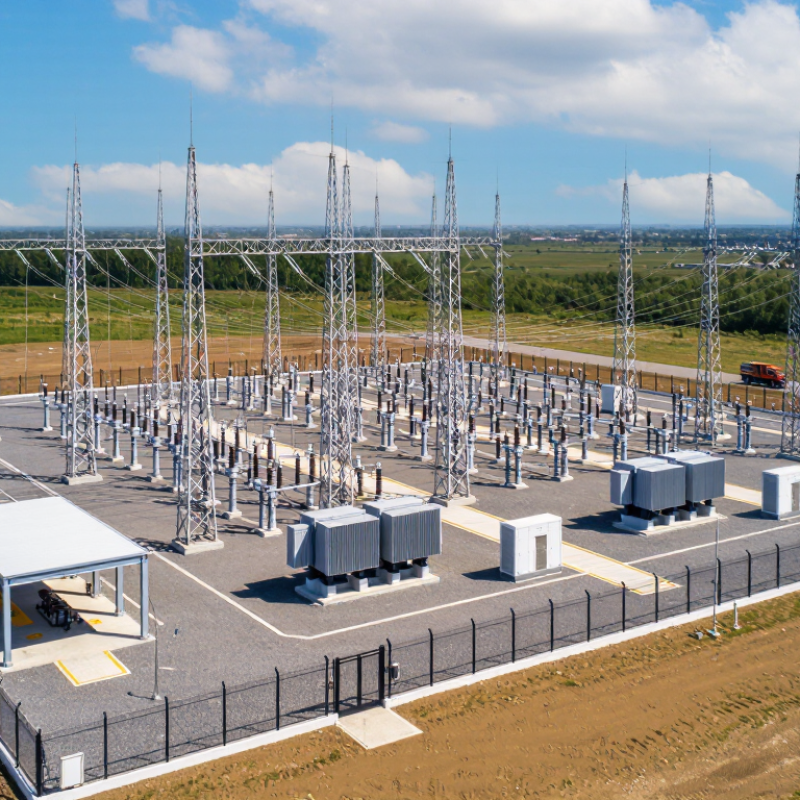
Outdoor substations differ in layout and purpose. An air-insulated substation uses open-air busbars and equipment, with visible clearances that help technicians inspect connections. A gas-insulated design encloses conductors in sealed modules, which can reduce the footprint but may require specialized maintenance. Hybrid arrangements combine elements of both. Space matters.
Their function depends on where they sit in the power network. Transmission substations connect high-voltage lines and use transformers to change voltage levels. Distribution substations step voltage down for local feeders. Switching substations redirect power between circuits without necessarily changing voltage. Circuit breakers interrupt fault currents, while busbars route electricity between equipment. Each component must suit the system’s voltage, load, and protection scheme.
Choosing a type means considering more than the initial footprint. Check expected demand, expansion plans, soil conditions, drainage, access for lifting equipment, and exposure to salt, dust, or heavy rain. Outdoor equipment needs clear working space and a practical inspection route. Weather matters. A compact layout may look efficient on a drawing, yet leave little room for safe repairs. Have qualified electrical engineers assess fault levels, clearances, protection coordination, and local operating conditions. Forecasts can be wrong, so leave room for reasonable changes rather than designing only for today’s load.
| Substation Type | How It Is Arranged | Typical Function and Use | Main Advantages | Key Considerations | Best Suited For |
|---|---|---|---|---|---|
| Air-Insulated Substation (AIS) | Uses air as the primary insulation between exposed or open-air high-voltage components, such as busbars, circuit breakers, disconnectors, and instrument transformers. | Transforms voltage and switches or protects power circuits at transmission and distribution substations. | Equipment is generally accessible for inspection; faults and component conditions can be easier to observe; commonly used technology with many equipment options. | Requires more land and electrical clearances than compact enclosed designs. Layout must account for weather, pollution, altitude, safety distances, and maintenance access. | Sites with adequate land, accessible equipment, and established outdoor-substation practices. |
| Gas-Insulated Substation (GIS) | Encloses high-voltage switching components in sealed, grounded metal compartments using an insulating gas or approved alternative insulating medium. Outdoor GIS equipment is designed for external weather exposure. | Provides switching, isolation, and protection where a compact high-voltage arrangement is required. | Typically needs less land than an equivalent AIS arrangement and shields internal live parts from direct environmental exposure. | Usually has higher initial equipment and specialist-service requirements. Gas handling, leak monitoring, environmental rules, and manufacturer-specific maintenance procedures must be considered. | Space-constrained sites or locations where enclosed switchgear is preferred, subject to lifecycle and service requirements. |
| Hybrid Substation | Combines air-insulated busbars or equipment with compact, enclosed switching modules, often integrating several functions into a reduced-footprint arrangement. | Performs the same core switching, protection, and voltage-transformation functions as other substations while balancing open-air and enclosed equipment. | Can reduce footprint compared with a fully air-insulated layout while retaining some accessible AIS components. | Equipment interfaces, spare-parts planning, operating procedures, and maintenance expertise need to cover both technologies. | Projects that need a smaller layout but do not require every high-voltage component to be enclosed. |
| Pole-Mounted Distribution Substation | Mounts a distribution transformer and associated protective or switching equipment on a utility pole or pole structure. The primary supply is commonly medium voltage, with a lower-voltage output for local distribution. | Steps distribution voltage down to the utilization voltage serving nearby homes, businesses, or small loads. | Uses little ground space and can be practical for dispersed loads along overhead distribution lines. | Capacity and equipment arrangement are limited by structural, electrical, and utility requirements. Access, clearances, public safety, and overhead-line conditions are important. | Rural or suburban overhead networks and relatively localized distribution loads. |
| Ground-Mounted Distribution Substation | Places the transformer and associated medium- and low-voltage equipment at ground level, commonly within a fenced compound or suitable enclosure. | Supplies a local distribution area, facility, or group of loads from a medium-voltage network. | Allows equipment capacity and layout to be selected for the site; ground-level equipment can simplify certain inspection and service tasks. | Requires a suitable site, clearances, security, drainage, earthing, and safe access. Transformer noise, fire protection, and environmental controls may also affect the design. | Local distribution systems, campuses, commercial developments, and industrial sites. |
| Mobile Substation | Integrates substation equipment on a transportable trailer or modular platform, with connections designed for temporary installation. | Provides temporary transformation and switching capacity during emergencies, planned maintenance, construction, or network upgrades. | Can be deployed to support continuity of supply or short-term capacity needs without building a permanent substation first. | Deployment depends on transport access, site preparation, connection compatibility, grounding, protection coordination, and available operating capacity. | Temporary service, outage support, construction projects, and contingency planning. |
Selection note: The appropriate choice depends on voltage level, load and growth forecasts, available land, environmental conditions, reliability targets, access for maintenance, safety requirements, and whole-life cost. Voltage ranges and equipment arrangements vary by utility, country, and project design; final specifications should be confirmed by qualified power-system engineers.
It connects, redirects, or changes voltage in a power network. Equipment sits outdoors, exposed to local weather.
Air-insulated designs use visible outdoor equipment and clearances. Gas-insulated designs enclose conductors in sealed modules and can save space.
It combines elements of air-insulated and gas-insulated designs. The best arrangement depends on site needs and maintenance access.
Transmission substations connect high-voltage lines. Distribution substations lower voltage for local feeders. Switching substations redirect power between circuits.
Check demand, expansion plans, soil, drainage, lifting access, and weather exposure. Walk the site after rain. Routes can become unusable.
Match transformers, switchgear, busbars, and protection devices to the load, voltage, fault level, and operating conditions.
Not necessarily. It may reduce land use but leave little room for inspection or repairs. That trade-off is easy to miss.
Consider drainage, corrosion-resistant finishes, suitable enclosures, and lightning protection. Check flood, wind, heat, salt, and dust exposure.
Qualified electrical engineers should assess clearances, fault levels, and protection coordination. Local soil and weather data may change the plan.
Choosing the right Outdoor Substations begins with understanding the different types available and the functions each is designed to perform. Evaluate the expected electrical load, operating voltage, and site conditions, including available space, climate, and surroundings. These factors help determine the capacity and configuration needed for dependable operation.
Next, compare equipment options, substation layouts, and levels of environmental protection. Consider safety requirements, reliability, and the time and resources needed for routine maintenance. Finally, balance the initial budget with long-term operating costs and allow for possible future expansion. A well-matched design can meet current needs while remaining practical, safe, and adaptable as electrical demand changes.

 Mingri Electric