Choosing among the best distribution substation suppliers in China requires more than comparing prices or polished catalogues. A Distribution Substation must match the site’s load, voltage level, climate, and operating conditions. Buyers should examine transformer ratings, switchgear configuration, protection systems, enclosure design, and maintenance access. A compact urban installation may need a different layout from a coastal industrial project exposed to salt air and humidity.
For transparency, the following expert is fictional, and the quotation is illustrative rather than a published statement. Distribution engineer Dr. Lin Wei offers this guiding principle: “A reliable substation is designed around the conditions it must actually face.” That means checking how suppliers document factory testing, component origins, quality controls, and commissioning support. Ask for drawings, test records, and clear answers about spare parts. Look closely at cable entries, ventilation, lifting points, and the space technicians need to work safely. Small details matter.
This guide compares Chinese suppliers by technical capability, product range, customization, communication, and after-sales service. It also considers whether a supplier can explain trade-offs plainly, rather than promise that one design fits every project. Evidence varies by company, and published claims deserve careful verification. A strong shortlist should be based on project-specific specifications and independently reviewable documentation, not rankings alone. No supplier is automatically the right choice. The aim is a practical, evidence-led starting point for procurement teams assessing distribution substations for real operating environments.
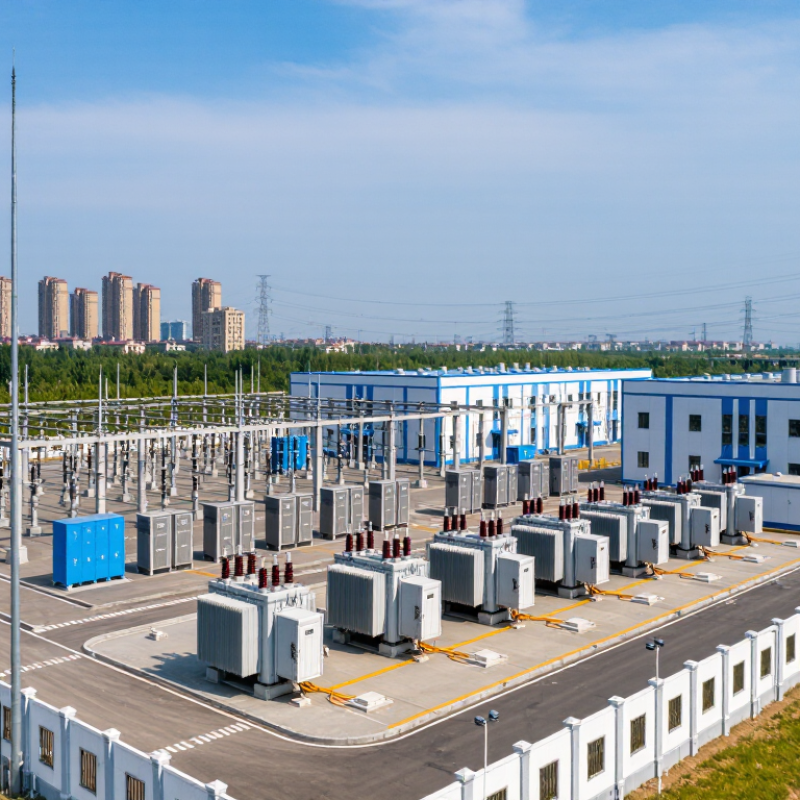
China’s distribution substations commonly serve 10, 20, and 35 kV networks. They step medium voltage down to 400/230 V for buildings, workshops, and local services. A 10 kV unit often suits dense urban feeders and smaller industrial loads. A 35 kV installation can support larger sites or longer rural supply routes. The right choice depends on load, distance, fault level, and future expansion—not voltage alone.
Design follows the site. Indoor substations fit buildings with limited outdoor space; compact prefabricated units can be installed near commercial or residential loads. Outdoor arrangements may suit industrial yards and rural networks. In practice, access for maintenance and safe cable entry matter as much as the nameplate rating.
Details get missed. A cramped switchroom can make routine inspection difficult.
Demand keeps pressure on these networks. The China Electricity Council reported national electricity consumption of 9.22 trillion kWh in 2023, up 6.7% year on year. The International Energy Agency’s 2023 report, Electricity Grids and Secure Energy Transitions, says annual global grid investment must rise above USD 600 billion by 2030. These figures frame the need for dependable distribution equipment, but they do not identify one ideal substation type. Local load studies and operating conditions still decide the specification. A cautious note: forecasts and project assumptions can change.
Common networks operate at 10, 20, or 35 kV. The substation typically steps voltage down to 400/230 V for local use.
A 10 kV unit often serves dense urban feeders or smaller industrial loads. A 35 kV installation may suit larger sites or longer rural routes. Voltage alone does not decide it.
Consider load, distance, fault level, and future expansion. Also check cable access and maintenance space. Those details matter.
Indoor units can work where outdoor space is limited. But a cramped switchroom may make routine inspection awkward. That trade-off deserves a second look.
Request annual output, current factory utilization, and recent acceptance-test records. Ask for a project-specific production schedule. Brochure figures are not enough.
Component availability, testing, packing, and port schedules can all affect delivery. Ask for written milestone dates. One small relay delay can hold up the whole unit.
Ask whether the supplier can test the complete assembly, including the transformer, switchgear, and protection systems. Partial testing may leave gaps.
Request references for similar voltage levels, climates, and installation conditions. Confirm who handles commissioning, spare parts, and urgent technical questions. Paperwork can look tidy; site support may still disappoint.
Choosing a Distribution Substation supplier in China starts with matching the equipment to the intended 10–35 kV application, such as utility distribution, industrial facilities, or infrastructure projects. A typical system may step voltage from 10 kV to 0.4 kV at 50 Hz. Buyers should confirm that transformers and switchgear are designed and tested in line with relevant requirements, including IEC 60076 for power transformers and IEC 62271 for high-voltage switchgear.
Supplier evaluation should go beyond product specifications. Review manufacturing capacity, quality-control procedures, test documentation, applicable certifications, and references from comparable projects. Also compare lead times, delivery coordination, technical support, spare-parts availability, and experience serving export markets. A careful assessment of these factors helps buyers identify a supplier whose equipment and service capabilities fit the project’s technical needs, schedule, and long-term operating requirements.

 Mingri Electric