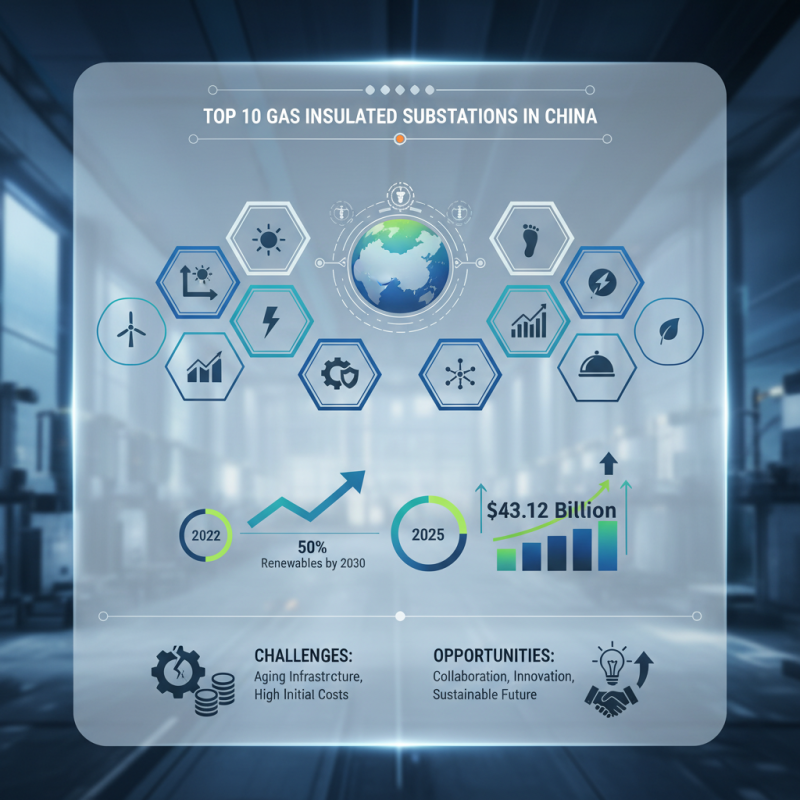
Gas Insulated Substations (GIS) are transforming the energy landscape in China. As the country accelerates its shift towards renewable energy, GIS plays a crucial role. These substations offer benefits such as reduced land use, lower maintenance costs, and enhanced safety. According to a report by Research and Markets, the global GIS market is projected to reach $43.12 billion by 2025, highlighting the growing demand.
China is home to some of the most advanced GIS installations. The country's commitment to expanding its power grid through technology is notable. In 2022, the National Energy Administration indicated that renewables would account for 50% of total energy generation by 2030. However, there are challenges. Aging infrastructure and high initial costs for GIS deployment require careful planning and investment.
For global buyers, understanding China’s top GIS projects is essential. These installations not only set high industry standards but also present opportunities for collaboration. As the demand for reliable power supply increases, it becomes vital to assess the performance and efficiency of GIS. This focus on innovation and technology will pave the way for a more sustainable future, although continuous evaluation and improvement are necessary.
Overview of Gas Insulated Substations (GIS) Technology
Gas Insulated Substations (GIS) have transformed the electrical infrastructure landscape in recent years. These systems use gas insulation, primarily sulfur hexafluoride (SF6), to prevent electrical discharge. This technology allows for more compact designs, making it suitable for urban environments where space is limited. GIS reduces environmental impact and increases system reliability.
Modern GIS offer remarkable benefits. They perform well in extreme weather conditions and require less maintenance. The materials used are robust, ensuring longevity. However, the use of SF6 poses environmental challenges, as it's a potent greenhouse gas. Industry leaders are reflecting on the need for alternative gases to foster sustainability in energy infrastructure.
Tip: When considering GIS, assess the total lifecycle impact. Evaluate not only the initial costs but also the long-term implications for maintenance and environmental impact.
Understanding GIS technology is crucial for global buyers. Look for suppliers with a proven track record in engineering expertise. Do not overlook regulatory compliance as safety standards vary widely. This diligence can lead to better investment choices.
Tip: Collaborating with local experts can enhance your project’s success. Their insights into regional regulations and practices are invaluable. Consider community engagement as part of your GE strategy.
Current Trends in China's Gas Insulated Substation Industry
The gas insulated substation (GIS) industry in China is experiencing rapid growth. This trend reflects the increasing demand for efficient energy solutions. GIS technology helps to optimize space and enhance safety, making it attractive for modern infrastructure projects. Many cities are adopting this technology as part of their urban planning initiatives.
However, challenges remain in the industry. High initial costs are a barrier for some developers. Additionally, there can be concerns regarding the long-term reliability of GIS systems. Effective maintenance practices are crucial for ensuring the durability and performance of these installations.
As global interest in sustainable energy rises, Chinese manufacturers are innovating. Enhanced technology and improved designs are key to remaining competitive. Yet, there is a need for standardization and better training within the sector. This ensures that professionals are competent in handling complex GIS systems. While the future looks promising, ongoing investment in research and development is essential for growth in this vital industry.
Top 10 Gas Insulated Substations in China
This bar chart displays the estimated capacity in megawatts (MW) of the top 10 gas insulated substations in China, illustrating the current trends and developments in the industry.
Criteria for Evaluating Top Gas Insulated Substations in China
When evaluating gas insulated substations (GIS) in China, several criteria are essential. First, consider the technology involved. Advanced GIS utilize SF6 gas, which is known for its excellent insulating properties. According to industry reports, GIS technology reduces the footprint by up to 90%, making it ideal for urban settings.
Another critical factor is reliability. A recent study indicated that GIS systems have a failure rate significantly lower than traditional substations. Most GIS installations report over 30 years of operational life with minimal maintenance. It's important to ensure that these systems are built using robust materials and technologies.
Tip: Always check for compliance with local and international standards. This compliance is crucial for ensuring safety and reliability.
Furthermore, assess the available data on environmental impact. GIS systems tend to have a lower carbon footprint compared to their conventional counterparts. However, the management of SF6 gas, a potent greenhouse gas, requires careful consideration.
Tip: Engage with engineers who specialize in GIS for deeper insights. They can provide real-world examples and analysis that reflect potential challenges and benefits. Exploring these aspects leads to more informed decisions in selecting the right GIS systems.
List of the Top 10 Gas Insulated Substations in China
China has rapidly advanced in gas insulated substations (GIS), which are crucial for efficient energy distribution. According to industry reports, China's GIS market is projected to grow by approximately 10% annually. This growth is driven by urbanization and the need for reliable power infrastructure.
The top gas insulated substations in China showcase advanced technology. Many utilize insulation gas like SF6, which enhances performance and reduces environmental impact. However, the reliance on SF6 raises concerns due to its high global warming potential. Ongoing research aims to find alternatives, though current options remain limited.
Not all GIS projects meet expectations. Some installations have faced challenges such as high maintenance costs and operational issues. Proper training for personnel is essential, as human error can lead to significant performance drops. Additionally, integrating GIS into aging infrastructure presents its own hurdles. Thus, global buyers must weigh these factors when considering investments in China's GIS sector.
Global Implications and Opportunities for Buyers of GIS in China
As the global energy landscape evolves, China emerges as a leader in gas insulated substations (GIS) technology. According to a report by the Global Data Institute, the GIS market in China is projected to grow at a CAGR of 10% from 2023 to 2028. This growth reflects China's proactive approach in addressing urban energy demands while minimizing environmental impact.
Global buyers looking into GIS have substantial opportunities in China. The growing focus on renewable energy integration drives the demand for advanced grid technologies. GIS offers several advantages, including a smaller footprint and reduced maintenance costs. However, potential buyers must be cautious. The reliance on imported technologies and components can raise concerns about supply chain stability in times of geopolitical tension.
While advancements are commendable, there remains a need for clear standards and certifications. The rapid growth in GIS projects can sometimes outpace regulatory frameworks. Industry experts stress the importance of thorough due diligence when engaging with suppliers in China. Ensuring quality and reliability is crucial in a landscape marked by both innovation and volatility.
Top 10 Gas Insulated Substations in China for Global Buyers
| Ranking |
Location |
Capacity (MVAs) |
Technology Type |
Commissioning Year |
Remarks |
| 1 |
Beijing |
800 |
Hybrid GIS |
2015 |
High efficiency and reliability. |
| 2 |
Shanghai |
1000 |
Full GIS |
2017 |
Innovative design, compact size. |
| 3 |
Guangzhou |
600 |
Modular GIS |
2016 |
Flexible and scalable solution. |
| 4 |
Shenzhen |
750 |
Hybrid GIS |
2018 |
Smart grid ready. |
| 5 |
Chengdu |
500 |
Compact GIS |
2019 |
Designed for urban areas. |
| 6 |
Hangzhou |
900 |
Hybrid GIS |
2016 |
Environmental friendly design. |
| 7 |
Xi'an |
700 |
Modular GIS |
2015 |
Optimized for rapid deployment. |
| 8 |
Tianjin |
850 |
Full GIS |
2020 |
Integrated digital technology. |
| 9 |
Wuhan |
400 |
Compact GIS |
2018 |
Space-saving design. |
| 10 |
Suzhou |
650 |
Hybrid GIS |
2019 |
High reliability and low maintenance. |
Conclusion
Gas Insulated Substations (GIS) represent a cutting-edge technology in the power distribution sector, utilizing gas insulation to enhance efficiency and reduce space requirements. This article explores the current trends in China's GIS industry, highlighting advancements in technology and growing demand driven by urbanization and infrastructure development.
Additionally, the piece outlines key criteria for evaluating the top gas insulated substations in China, emphasizing factors such as reliability, innovation, and environmental impact. A list of the top 10 GIS facilities in the country provides insightful benchmarks for global buyers seeking to enhance their energy infrastructure. Lastly, the article discusses the global implications and opportunities for international buyers interested in procuring GIS technology from China, showcasing the potential for collaboration and investment in this thriving sector.

 Mingri Electric