Outdoor Ring Main Unit selection is becoming more important as distribution networks expand, decentralize, and face harsher operating conditions. The IEA’s Electricity 2024 report forecasts average global electricity-demand growth of 3.4% annually through 2026. Its Grids and Secure Energy Transitions report also states that annual grid investment must exceed $600 billion by 2030. More feeders mean more switching points. Reliability cannot depend on one enclosure design.
The main Outdoor Ring Main Unit types include air-insulated, gas-insulated, and solid-insulated units. Air-insulated units offer simpler inspection and familiar maintenance procedures. Gas-insulated units save space and protect internal components from dust, moisture, and salt pollution. Solid-insulated units remove gas-management concerns, while supporting compact, sealed construction. Each type has trade-offs. That matters.
IEEE Fellow John D. McDonald has observed, “The electric power grid is the largest machine ever built.” His broader point applies directly here: every RMU operates within a larger protection, automation, and maintenance system. IEC 62271 standards provide an essential technical reference, but compliance alone does not guarantee the best field result. Cable termination quality, corrosion protection, fault indicators, remote-control needs, and safe access deserve equal attention. Small details matter. A neat classification can still mislead.
This guide compares the leading Outdoor Ring Main Unit types by insulation method, environmental performance, footprint, maintenance demand, safety characteristics, and lifecycle cost. The “best” type is rarely universal. Site conditions decide. Even reliable data has limits when project assumptions remain incomplete.
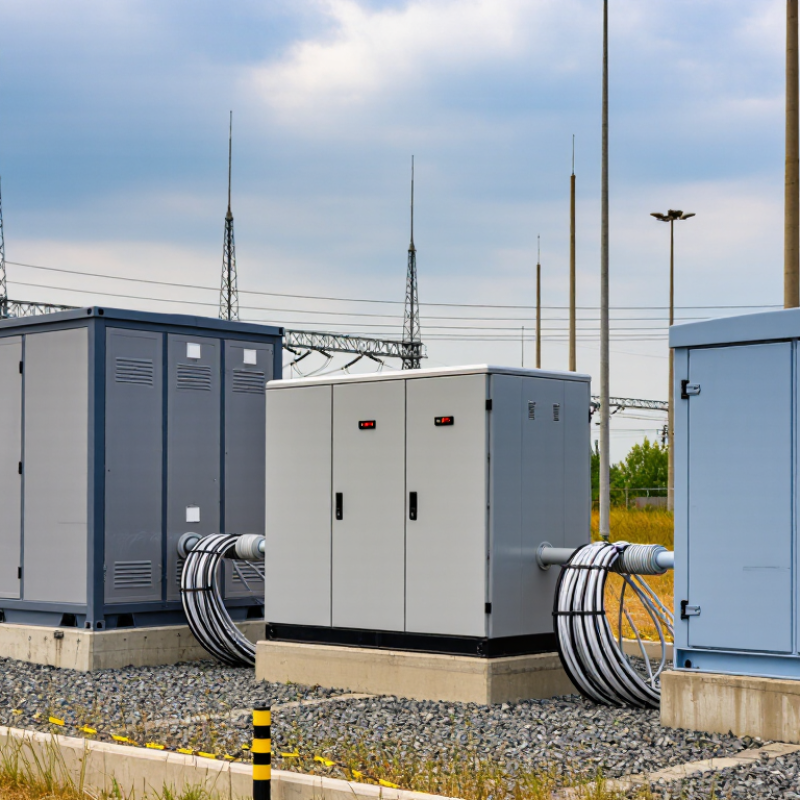
What Are the Top Outdoor Ring Main Unit Types?
An outdoor Ring Main Unit, or RMU, controls medium-voltage power in a compact enclosure. It usually connects two ring feeders and one transformer branch. During normal operation, current enters through one feeder and leaves through the other. A load-break switch opens the circuit when maintenance is required. If a cable fault occurs, protection isolates only the damaged section. The remaining network can continue supplying nearby loads. This selective action reduces outage time. It also limits unnecessary switching.
The main outdoor RMU types include air-insulated, gas-insulated, solid-dielectric, and vacuum-interruption designs. Air-insulated units simplify visual inspection but need more space. Gas-insulated units are compact and resist dust, moisture, and salt exposure. However, gas selection deserves careful review because some insulating gases have high global-warming impact. Solid-dielectric units avoid gas handling, while vacuum interrupters provide reliable arc interruption. The IEA’s Electricity Grids and Secure Energy Transitions report (2023) estimates that annual grid investment must exceed 600 billion dollars by 2030. That pressure makes compact, serviceable distribution equipment increasingly important.
Tips: Check altitude, humidity, coastal salt, and enclosure protection before choosing an RMU. Confirm short-circuit ratings and cable compatibility. Ask for real test records, not only catalog claims. A lower purchase price may hide difficult maintenance. No selection is perfect. Even experienced teams can underestimate condensation, access space, or future load growth.
An outdoor ring main unit (RMU) is a compact medium-voltage switchgear assembly used to connect, protect, isolate, and control distribution transformers and cable sections in a ring or radial network. The values below are typical specification ranges for medium-voltage distribution equipment; the exact rating depends on the network design, applicable standards, and utility requirements.
| RMU Type | Insulation Medium | Typical Voltage Range | Typical Continuous Current | Typical Short-Time Withstand | How It Works | Main Advantages | Typical Applications |
|---|---|---|---|---|---|---|---|
| Air-Insulated RMU | Air; solid insulation may be used around busbars or cable terminations | Up to approximately 24 kV | 630–1,250 A | Typically 16–25 kA for 1–3 seconds | Switches and circuit breakers interrupt load or fault current in air. Earthing switches provide a visible or mechanically indicated grounded condition during maintenance. | No gas-handling system; easier visual access; suitable for installations where enclosure space is available. | Outdoor substations, industrial feeders, utility distribution points, and locations with moderate space requirements. |
| Gas-Insulated RMU | Sealed insulating gas compartment; traditional designs commonly use SF6, while newer designs may use alternative gases | Typically 12–36 kV | 630–1,250 A | Typically 16–25 kA for 1–3 seconds | The sealed gas compartment provides insulation between energized conductors. Load-break switches interrupt normal current, while circuit breakers clear short-circuit faults. | Compact footprint; high resistance to dust, humidity, and pollution; reduced maintenance of live parts. | Urban substations, wind and solar collection systems, commercial facilities, and space-constrained outdoor networks. |
| Solid-Insulated RMU | Epoxy resin or other engineered solid dielectric materials | Typically 12–24 kV | 630–1,250 A | Typically 16–25 kA for 1–3 seconds | Conductors and switching components are encapsulated or supported by solid dielectric insulation. Vacuum interrupters are often used for circuit interruption. | No insulating-gas leakage; low environmental sensitivity; compact and suitable for modern low-maintenance networks. | Renewable-energy installations, industrial plants, public infrastructure, and environmentally sensitive sites. |
| Vacuum Circuit-Breaker RMU | Air, solid dielectric, or gas insulation around a vacuum interrupter | Typically 12–24 kV | 630–1,250 A | Typically 16–25 kA for 1–3 seconds | A vacuum interrupter extinguishes the arc when the circuit breaker contacts separate. Protection relays detect faults and command the breaker to open. | Fast fault interruption; long electrical life; suitable for frequent switching and protection automation. | Transformer feeders, industrial distribution, motor-related circuits, and networks requiring relay-based fault protection. |
| Hybrid RMU | A combination of air, solid dielectric, vacuum, or sealed gas insulation technologies | Typically 12–36 kV | 630–1,250 A | Typically 16–25 kA for 1–3 seconds | Different functions use different technologies—for example, vacuum interruption for fault clearing and solid or gas insulation for compact busbar compartments. | Balances compact size, environmental performance, switching capability, and operational flexibility. | Smart grids, automated distribution networks, renewable-energy collector systems, and critical infrastructure. |
Typical ratings shown are representative medium-voltage distribution values and are not a substitute for a project-specific equipment datasheet or system short-circuit study.
The common types are air-insulated, gas-insulated, and solid-insulated units. Each design suits different site conditions. No choice wins everywhere.
Air-insulated units suit rural substations, construction sites, and locations needing visual inspection. Their cabinets usually need more space. Dust and moisture require regular cleaning.
Gas-insulated units are compact and well protected from rain, dust, and coastal salt. They suit crowded urban substations and industrial networks. Technicians must check pressure and seals.
They should inspect gas pressure, sealing condition, and approved handling procedures. A small leak can become a serious maintenance issue. Do not rely on appearance alone.
Solid-insulated units avoid routine gas monitoring and perform well in harsh environments. Their sealed construction can reduce exposure to moisture. Fault diagnosis may be less obvious.
Start with the site, not the brochure. Check voltage, load current, fault level, altitude, humidity, and flood exposure. Confirm enclosure ratings and utility requirements.
Inspect cable terminations, interlocks, earthing points, and condensation marks. Check access height and future expansion space. A larger enclosure may simplify repairs.
Distributed generation can create bidirectional power flows. Protection coordination should be checked in both directions. A neat specification can still fail in muddy service.
Request verified test reports, corrosion data, spare-part support, and applicable compliance documents. Compare life-cycle costs, outages, and maintenance needs. Brochures are not enough.
An Outdoor Ring Main Unit is a compact medium-voltage switchgear assembly designed to control, protect, and isolate sections of a distribution network. It typically connects incoming and outgoing feeders in a ring arrangement, allowing electricity to be supplied from alternative directions when maintenance or a fault occurs. Common types include load-break switch units, fused units, circuit-breaker units, and compact combinations designed for different protection and switching requirements. These configurations can be adapted for utility networks, commercial facilities, industrial sites, and renewable energy installations.
Gas-insulated and air-insulated RMUs differ mainly in insulation method, footprint, maintenance needs, and environmental suitability. Gas-insulated designs are compact and well sealed, while air-insulated units can offer simpler inspection and servicing. Smart and automated Outdoor Ring Main Unit systems may include remote monitoring, fault indication, motorized operation, and communication functions for faster network management. The right type should be selected by evaluating voltage and load ratings, fault levels, installation conditions, safety requirements, future expansion, maintenance practices, and total lifecycle cost.

 Mingri Electric