Why Choose a GIS Substation for Your Project?

Time:2026-11-08 Author:Amelia
0%

A GIS Substation can make a project fit where space is scarce. Its gas-insulated equipment sits inside sealed metal enclosures, reducing the footprint compared with many air-insulated designs. That can matter beside a city street, inside an industrial plant, or on a site where every metre affects access and layout. The choice still depends on more than land. Teams must weigh voltage level, reliability targets, maintenance access, installation conditions, and lifecycle costs. Compact does not automatically mean simpler.

The design also changes how people inspect and service equipment. A row of enclosed bays may look orderly, but clear plans for monitoring, gas handling, spare parts, and outage response remain essential. As a practical design principle: “A smaller footprint is useful only when the maintenance plan is just as carefully engineered.” This is an editorial quotation, not a verified statement from a named expert; a sourced expert’s name and exact words should be confirmed before publication. That distinction matters. Credible project decisions need traceable evidence, not invented authority.

This outline examines where a GIS Substation offers real value, what trade-offs deserve attention, and which project conditions should guide selection. It also considers a point that is easy to miss: the right choice on paper may need revisiting after site access and service requirements become clear.
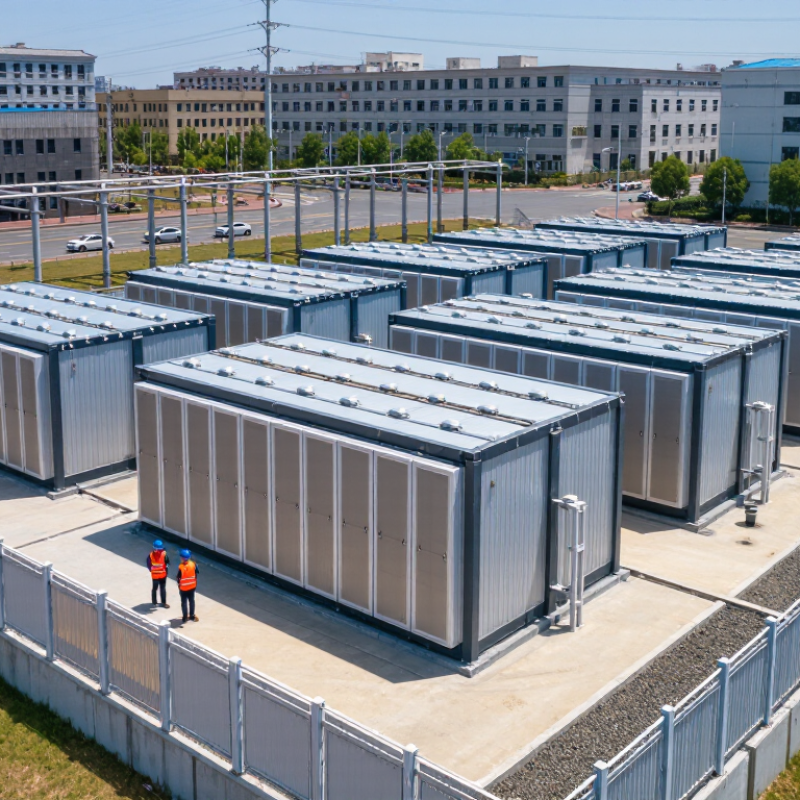
Why Choose a GIS Substation for Your Project?

What Is a GIS Substation?

A GIS substation is an electrical substation that uses gas-insulated switchgear for key switching functions. Conductors, circuit breakers, disconnectors, and busbars sit inside sealed, grounded metal enclosures. An insulating gas helps prevent electrical flashover in the compact spaces between energized parts. Many installations use sulfur hexafluoride, while lower-impact gas mixtures and other designs are also becoming available.

Space matters. Compared with air-insulated equipment, GIS can fit more switching capacity into a smaller footprint. This can help where land is limited, such as dense urban areas or industrial sites. Enclosed components are also less exposed to dust, salt, and weather. But compact does not mean simple. A project still needs careful design for heat, access, clearances, and safe maintenance.

The sealed design requires monitoring for gas pressure and possible leaks, alongside routine inspection of operating mechanisms and control systems. A site team should check service access, spare-part availability, and the environmental impact of the selected insulating medium. GIS may reduce land requirements, but it can involve higher equipment costs and more specialized maintenance. The right choice depends on the site, voltage level, reliability needs, and long-term operating plan. There is no universal best fit.

How Does a GIS Substation Work?

A GIS substation moves electricity through metal-enclosed switchgear, where insulating gas separates live conductors from grounded walls. The busbars carry current between bays, while circuit breakers open or close the path. Disconnectors isolate equipment for planned maintenance. Current and voltage transformers provide measurements for protective relays and control systems.

When a fault occurs, a relay detects abnormal current and signals the breaker to interrupt the circuit. Inside the breaker, the arc is extinguished as the contacts separate. The insulating gas helps withstand electrical stress within the sealed enclosure; the gas type varies by equipment design. That sequence is fast. Sensors can monitor gas density, temperature, and pressure, helping operators spot changes before they affect operation.

A compact layout is useful where land is limited, but it does not remove maintenance needs. Technicians still check seals, alarms, operating mechanisms, and protection settings. One detail is easy to underestimate: access for inspection must be designed into a tightly packed room. Remote monitoring can help, though it cannot replace sound commissioning or careful review of alarms. Small footprint, careful planning.

What Benefits Does GIS Offer for Projects?

Why Choose a GIS Substation for Your Project?

What Benefits Does GIS Offer for Projects?

A GIS substation encloses high-voltage components in grounded metal compartments filled with an insulating medium. This arrangement can reduce the space needed for switchgear. That smaller footprint may suit dense urban sites, industrial facilities, or projects with limited land. It can also leave more room for access routes and other equipment. The compartments shield energized parts from dust, salt, and moisture. That matters.

GIS can support reliable operation in harsh or crowded environments, while fewer exposed connections may reduce some inspection needs. It does not eliminate maintenance. Teams still need to monitor equipment, check seals, and follow safe service procedures. Repairs can require specialized skills, and a fault inside a compartment may take longer to locate or fix. The trade-off is real. Project teams should compare land savings with installation costs, maintenance access, and the chosen insulating medium’s handling requirements. In a tight site, a clear access plan is easy to overlook. A careful layout review can reveal whether GIS offers practical value for the project.

Which Project Conditions Suit GIS Substations?

GIS substations suit projects where space is limited and reliable power is essential. In dense urban areas, equipment can fit inside a compact building instead of occupying a large outdoor yard. This can simplify site planning near roads, factories, or existing facilities. It helps, but does not remove every constraint.

They can also be practical in coastal or industrial locations, where salt, dust, or pollution may challenge exposed equipment. Enclosed designs reduce direct exposure to these conditions. For underground stations or sites with strict visual limits, a smaller footprint can make planning easier. Access still matters.

Project teams should compare expected load, voltage, fault levels, expansion plans, and maintenance resources before selecting GIS. Indoor layouts need safe access for inspection and equipment replacement. Specialized components and service expertise can affect lifecycle costs, so a low land requirement does not always mean a lower total cost. A detail teams sometimes underestimate is future expansion: adding capacity may be harder if the original layout leaves little room. The right choice depends on the site, not just the footprint.

Why Choose a GIS Substation? Which Project Conditions Suit GIS?

Typical land-footprint comparison: GIS substations may require about 10–20% of the site area of an equivalent AIS substation. Values are indicative; actual requirements depend on voltage, layout, clearances, and site conditions.

GIS is often a good fit where land is scarce or expensive, such as urban sites, constrained industrial facilities, or projects requiring compact indoor equipment. AIS may be preferable when ample outdoor space is available and minimizing initial equipment cost is a priority.

What Should Be Considered When Planning a GIS Substation?

A GIS substation can fit where a conventional air-insulated layout may be difficult, but a smaller footprint does not make planning simple. Start with the site: check soil conditions, flood exposure, seismic risk, and nearby salt or industrial pollution. These details influence building design, enclosure protection, and long-term reliability. Space is only one factor.

Plan how equipment will be installed and serviced. Confirm routes for heavy transformers, cable trenches, ventilation, and lifting equipment before fixing the layout. Leave practical access around switchgear panels and allow room for testing or replacing components. Plan for maintenance. A tight layout may look efficient on paper, then slow a repair when a panel must be removed. That assumption can be wrong.

Also define the required voltage level, load profile, protection scheme, and expected expansion early. Check how the GIS will connect to transformers, overhead lines, control systems, and the wider grid. Select insulation gas and monitoring methods with operating conditions and environmental goals in mind. Ask for clear inspection intervals, spare-parts requirements, and lifecycle cost estimates—not only the purchase price. Some inputs will change during design. Record the assumptions, and revisit them when site surveys or utility requirements provide better evidence.

Why Choose a GIS Substation for Your Project? - What Should Be Considered When Planning a GIS Substation?

Planning Dimension GIS Characteristics and Indicative Data What to Consider for the Project
Space and Site Footprint Gas-insulated switchgear (GIS) can require substantially less switchgear area than air-insulated switchgear (AIS). Depending on voltage, layout, clearances, and site conditions, GIS switchgear footprints are often roughly 10–20% of comparable AIS switchgear areas; this is an indicative comparison, not a guaranteed project ratio. Compare the complete substation layouts, including buildings, transformers, cable routes, access roads, fire separation, and future expansion—not just the switchgear bays. GIS is often advantageous on urban, industrial, offshore, or otherwise space-constrained sites.
Voltage and Configuration GIS is used across medium-, high-, and extra-high-voltage applications. Available system voltage, busbar arrangements, circuit-breaker ratings, and bay configurations depend on the project specification and applicable standards. Confirm the nominal and maximum system voltage, short-circuit duty, insulation coordination, busbar scheme, number of feeders, and required reliability. Reserve space and interfaces for planned circuits or a future busbar extension.
Insulation and Enclosure GIS places live primary components inside grounded metal enclosures and uses an insulating gas or gas mixture. This arrangement reduces exposure to external contamination and weather compared with exposed AIS equipment. Specify enclosure materials, corrosion protection, gas compartments, monitoring, pressure-relief provisions, and internal-arc requirements. Check the design against site conditions, including humidity, salt, dust, pollution, and seismic activity.
Reliability and Operating Environment The enclosed design can reduce the effect of pollution, wind, and severe weather on primary insulation. Overall substation reliability still depends on the selected circuit arrangement, component quality, protection, installation, and maintenance. Define the required availability and outage strategy. Assess redundancy, bus-sectioning, spare parts, fault isolation, maintenance access, and the impact of taking an individual gas compartment or bay out of service.
Capital Cost and Civil Works GIS switchgear equipment generally has a higher purchase cost than comparable AIS equipment, while reduced land requirements may lower land, building, and site-development costs. The overall cost balance is project-specific. Compare total installed and lifecycle costs, including the GIS building, foundations, transport, assembly, testing, ventilation, fire protection, cable systems, land, and the cost of future outages or extensions.
Building and Indoor Environment Indoor GIS installations require an appropriately designed building or enclosure. Equipment access, ventilation, temperature control where required, lighting, fire protection, and safe egress are part of the installation design. Coordinate building dimensions and lifting routes with the equipment supplier’s installation requirements. Check local building and fire codes, flood levels, drainage, ventilation, working clearances, and emergency access.
Maintenance and Specialist Skills GIS may reduce routine exposure of primary insulation to the environment, but it requires gas-system monitoring and specialist procedures for inspection, compartment access, gas handling, and internal work. Plan inspection and maintenance tasks, staff training, specialist tools, service support, spare parts, and safe isolation procedures. Use the equipment manufacturer’s maintenance instructions and applicable regulations rather than assuming a universal interval.
Environmental Impact of Insulating Gas SF6 has a very high global-warming potential: the IPCC Sixth Assessment Report gives a 100-year value of 25,200 relative to CO2. SF6-containing equipment therefore requires careful gas management; alternative gas mixtures and technologies are also available for some applications. Evaluate applicable restrictions, reporting obligations, leakage monitoring, recovery and recycling arrangements, and end-of-life handling. Consider technically suitable low-GWP alternatives and compare their availability, performance, and operating requirements.
Installation and Commissioning GIS sections are factory-assembled or supplied in transportable modules, then connected and tested on site. Transport dimensions, lifting weights, cleanliness, and assembly procedures can be important constraints. Verify road and site access, crane capacity, delivery sequencing, storage conditions, clean assembly space, connection interfaces, testing requirements, and commissioning time in the project schedule.
Safety and Emergency Planning Grounded enclosures provide a defined protective boundary, but electrical hazards, arc faults, pressure-related hazards, and gas-handling risks still require engineered controls and operating procedures. Complete project-specific hazard assessments. Confirm earthing, interlocking, protection, arc-pressure management, gas detection where required, restricted-access arrangements, emergency response, and compliance with local electrical-safety rules.
Future Expansion and Interfaces GIS can support compact, modular arrangements, but adding bays later may require coordinated extensions, outages, compatible interfaces, and access to the GIS building. Define the ultimate substation layout at the outset. Specify extension points, reserved building space, busbar interfaces, cable and transformer connections, control-system capacity, and the strategy for maintaining service during expansion.

Planning note: Figures and comparisons are indicative and vary with voltage, ratings, layout, standards, and site conditions. Confirm project values through a site-specific engineering study and the applicable regulations.

FAQS

What is a GIS substation?

It uses gas-insulated switchgear inside grounded metal enclosures. Conductors, breakers, and busbars fit within sealed compartments. Compact, but not simple.

How does electricity move through a GIS substation?

Busbars carry current between equipment bays. Circuit breakers open or close the path, while disconnectors isolate equipment for planned maintenance.

What happens when a fault occurs?

Protective relays detect abnormal current and signal a breaker to interrupt the circuit. The breaker separates its contacts and extinguishes the resulting arc. It happens fast.

Why choose GIS when land is limited?

GIS can fit substantial switching capacity into a smaller area. That can help in dense cities, factories, or underground sites. Space is not the only concern.

Does GIS suit coastal or industrial locations?

Enclosed equipment has less direct exposure to salt, dust, and pollution than exposed equipment. Teams still need to plan inspections and equipment access.

What maintenance does GIS require?

Technicians check gas pressure, seals, alarms, operating mechanisms, and protection settings. Sensors can flag changing temperature or pressure. They cannot replace careful inspections.

Can GIS lower a project’s total cost?

A smaller land requirement may help site planning, but specialized equipment and maintenance can raise costs. Compare the full lifecycle, not just the footprint.

What should teams consider before choosing GIS?

Review load, voltage, fault levels, expansion plans, and available maintenance expertise. Leave room for equipment replacement. Future expansion is easy to underestimate; I would not treat that as a minor detail.

Conclusion

A Gis Substation is an electrical substation that uses gas-insulated equipment to manage and protect power systems. Its main components are enclosed in sealed compartments, where insulating gas helps prevent electrical faults and allows reliable operation in a compact space. By controlling and routing power through switches, circuit breakers, and other equipment, a GIS substation supports safe, stable connections between transmission and distribution networks.

GIS can reduce land requirements, limit exposure to environmental conditions, and simplify installation where space is constrained. It may suit urban developments, industrial sites, and projects with demanding reliability or site-access needs. However, planning should account for project capacity, layout, ventilation, safety clearances, maintenance access, environmental conditions, lifecycle costs, and the handling and monitoring of insulating gas. Assessing these factors early helps determine whether GIS is an appropriate fit for the project.


Amelia

Amelia

Amelia is a seasoned marketing professional with a wealth of expertise in our company’s core offerings. With an unwavering passion for driving growth and innovation, she plays a pivotal role in shaping our marketing strategies and enhancing brand visibility. A key aspect of her responsibilities......