Empowering Australia's Industrial Resilience with AS/NZS Compliant Isolation Solutions. Engineering the transition from Raw Voltage to Strategic Value.
Send Inquiry NowThe Australian market represents one of the most demanding environments for electrical switchgear globally. From the extreme thermal cycles of the Western Australian outback to the high-humidity coastal regions of Queensland, Load Isolating Switches must perform with unwavering reliability. As Australia pushes toward "Net Zero" by 2050, the integration of large-scale solar farms and wind energy assets into the National Electricity Market (NEM) has created a surge in demand for high-performance disconnect solutions.
At Mingri Electric, we recognize that an isolation switch in Australia isn't just a component; it's a safety barrier for maintenance crews and a safeguard against catastrophic equipment failure in remote mining operations where downtime costs can exceed $100,000 per hour.
Global procurement directors are shifting their focus from "lowest cost" to "highest resilience." Our manufacturing facility in China embodies the 4.0 revolution, blending vertical integration with AI-driven quality control.
Unlike competitors who merely assemble parts, we control the production of our stamping dies and high-performance metal components. This ensures that every HH15 or HGL switch has a unified DNA of quality, reducing "weak link" failures in the field.
In a post-pandemic world, lead times are critical. Our digitized warehouse and localized raw material sourcing allow us to fulfill bulk orders for Australian infrastructure projects up to 30% faster than traditional European manufacturers.

As Australia adopts more microgrids, the need for isolating switches that can handle bidirectional power flows is increasing. Our switches are designed to manage the complexities of solar-plus-storage applications where arc flash protection is paramount.
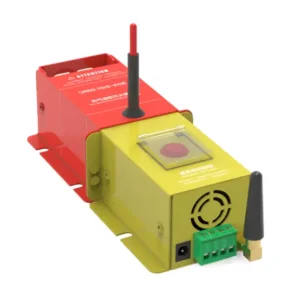
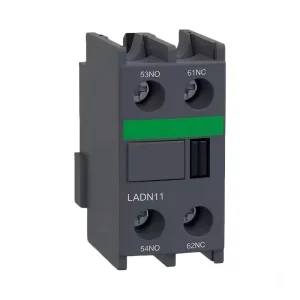
The "Silent Switch" is dead. The future is intelligent. We are integrating thermal sensors and auxiliary contacts (like our LADN series) into load isolation units to provide real-time data on contact wear and temperature rise.
Australian procurement guidelines now heavily weight the "Environmental Product Declaration (EPD)." We utilize recyclable polymers and high-conductivity copper alloys that ensure a service life of 20+ years, significantly reducing the total cost of ownership (TCO).
Pro-Tip for Engineers: When selecting a manufacturer, look for Total Accountability. A company that makes its own circuit breakers and switchgear ensures seamless compatibility.
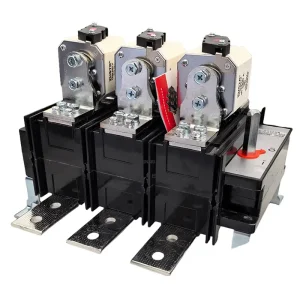
Dust-tight and vibration-resistant isolation switches for crushing plants in the Pilbara. Our HGL series handles heavy inductive loads with ease.
DC Isolation for utility-scale solar farms in New South Wales. High-voltage performance up to 1500V DC for string inverters.
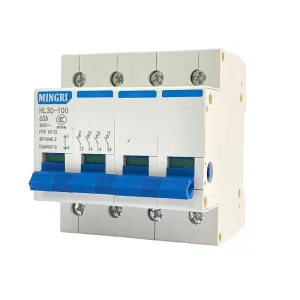
Sub-main distribution for Melbourne CBD high-rises. Space-saving HL30 miniature switches offer maximum protection in tight electrical cupboards.
Weatherproof isolation for pumping stations in the Murray-Darling Basin, ensuring safe maintenance of irrigation systems.
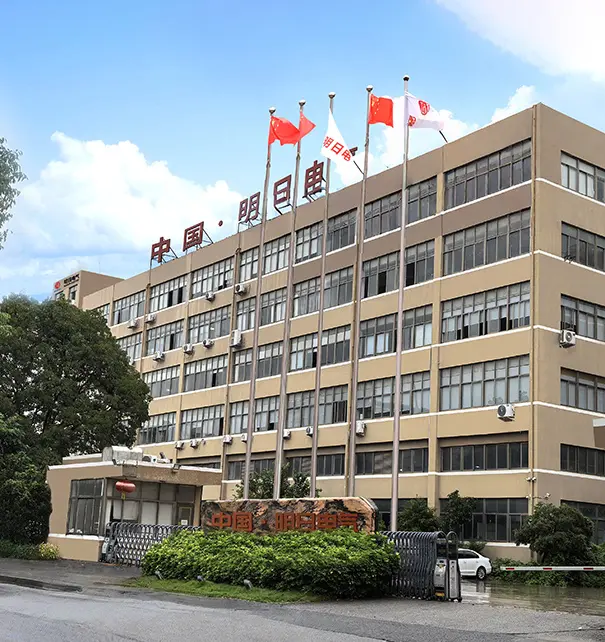
At Mingri Electric, our story is anchored in the vision of Mr. Fu: "To safeguard every circuit." This isn't just a slogan; it's an engineering mandate. We don't just meet standards; we exceed them through "Closed-Loop Quality."
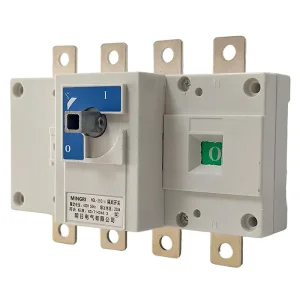
A load isolating switch (or load break switch) is designed to make, carry, and break currents under normal circuit conditions, including specified operating overload conditions. A standard disconnector is only intended to isolate the circuit after the current has been interrupted by another device. Our HGL series is a true load-break switch, providing maximum safety during operation.
Our engineering team has optimized our manufacturing processes to align with IEC 60947 standards, which are the foundation of AS/NZS 60947. We use premium grade fire-retardant materials and high-specification silver-alloy contacts to ensure durability under the Australian sun.
Yes. Over 40% of our production is dedicated to ODM partnerships. We can customize terminal configurations, mounting brackets, and enclosure ratings (IP65/66) to suit specific Australian project requirements.
Thanks to our Factory 4.0 logistics integration, standard production cycles are 15-20 days. Sea freight to major Australian ports typically takes an additional 18-25 days, making us faster than many local distributors who are currently facing stock shortages.
 Mingri Electric